3D model description
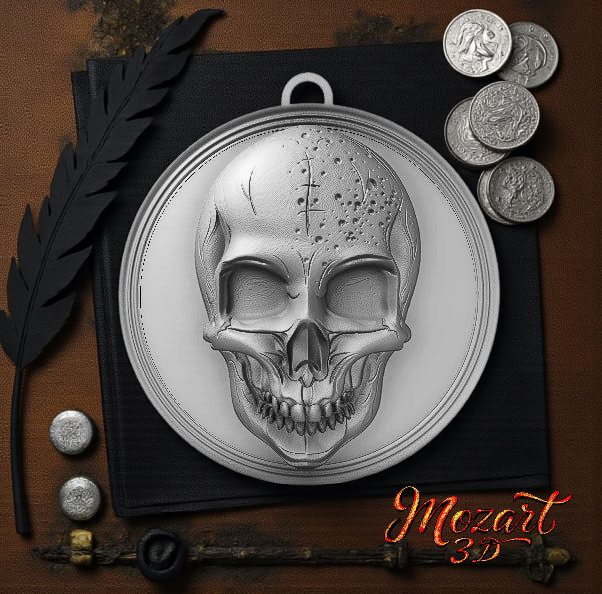
Relic of the Apocalypse is a powerful and expressive symbol of resilience, transforming the classic image of the memento mori into a sign of honor and survival.
Key Elements and Symbolism:
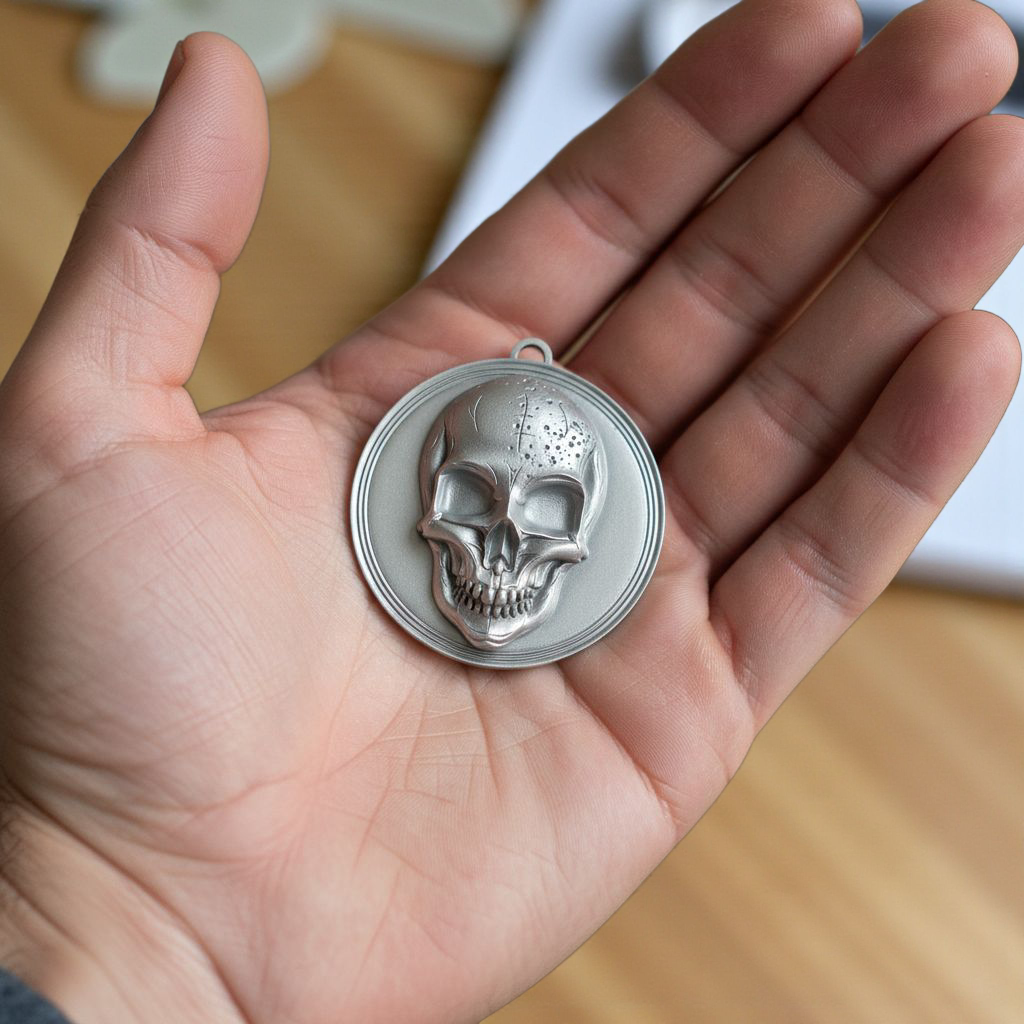
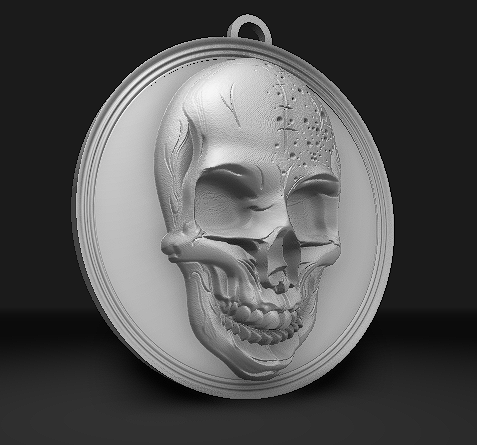
Skull: A highly detailed, anatomically accurate skull that serves as a timeless emblem of mortality and inevitability. It occupies a central position, protruding from the plane of the medallion.
Damage: The left side of the frontal bone (relative to the viewer) has several holes/dents (from gunshot or shrapnel), while the right side has a deep surgical or battle scar (in the shape of a cross or a path). These details transform the skull from an abstract symbol to a portrait of a “warrior” or “you who survived,” adding to the model’s history and drama.
Round frame and base text{Medallion: The skull is set in a well-defined round frame, adding formality and status to the medal or relic of the object. The frame emphasizes that this is not just a skull, but a worn artifact.
Pawn Hanging Loop: The sturdy, integrated loop on the top allows the model to be used as a pendant, key ring or decorative element. Its minimalist design does not distract from the main image.
Cult Potential: The Scar is ideal for fans of gothic, post-apocalyptic universes such as Fallout, Mad Max and survival games. It is a talisman that celebrates the strength of the spirit, and could become a cult figure among communities that value roughness, realism and stoicism.
3D printing settings
General settings
Printing technology: SLA/Resin - strongly recommended for high detailing of small details (teeth, damage, scars). FDM printing is possible, but the detailing will be much lower.
Material:
SLA: Gray, black or metallic (silvery) resin for maximum contrast and effect.
FDM: PLA or PLA+ (Silk Silver) for a decorative effect.
Layer thickness: 0.025–0.05 mm for resin; 0.08–0.12 mm for FDM to ensure the clarity of all relief elements.
Filling: 10–20% (for resin – voids with a wall thickness of 1.5–2 mm). This is a suspension, so high filling strength is not required. Print orientation: Print at an angle of 30–45 degrees to the plane of the table (for resin) to reduce the contact area of the layers and minimize lines. When using FDM, print vertically to create relief layer by layer. resistance
Position: supports are necessary in the following places:
Chin and lower jaw: critical for supporting teeth and protruding parts.
Nasal cavity and eye socket: light support is necessary to prevent sagging.
Hinge: support is required under the inner part of the hinge.
Support type: light/medium supports (resin) or wood type supports (FDM) to minimize surface damage.
Post-processing
SLA: cleaning, UV drying, careful removal of supports and grinding/polishing (especially on the edge).
Painting (critically important): to fully realize the potential of the model:
Base layer (black or dark gray).
Dry brush with silver or metallic paint to highlight raised edges and damaged areas, giving the metal an aged look.




:format(webp)/https://fbi.cults3d.com/uploaders/44512862/illustration-file/053e49e5-bf4a-43dd-9759-d867ef747c47/photo_2025-09-26_20-48-48.jpg)
:format(webp)/https://fbi.cults3d.com/uploaders/44512862/illustration-file/e2a89894-24f2-4f1c-bb74-b06a9d6fff7c/1000004969.png)
:format(webp)/https://fbi.cults3d.com/uploaders/44512862/illustration-file/f8e9e3cc-4954-42ee-b5cd-9e039e76429d/1000004963.png)
:format(webp)/https://fbi.cults3d.com/uploaders/44512862/illustration-file/6e51b195-5b39-4fe2-9df4-14cb9f96d420/1000004964.png)
:format(webp)/https://fbi.cults3d.com/uploaders/44512862/illustration-file/9cf6f860-350c-42cb-b846-582aaab8fce1/photo_2025-09-27_14-57-52.jpg)
:format(webp)/https://fbi.cults3d.com/uploaders/44512862/illustration-file/835419c5-a814-4dce-9393-debcbcfb1fee/photo_2025-10-05_00-33-46.jpg)
:format(webp)/https://fbi.cults3d.com/uploaders/44512862/illustration-file/c933a52b-31b0-488f-bb56-117771115e9b/photo_2025-10-05_00-37-17.jpg)
:format(webp)/https://fbi.cults3d.com/uploaders/44512862/illustration-file/4f80aee7-8616-4f6e-b9cc-c73a4595ba17/photo_2025-10-05_00-37-11.jpg)