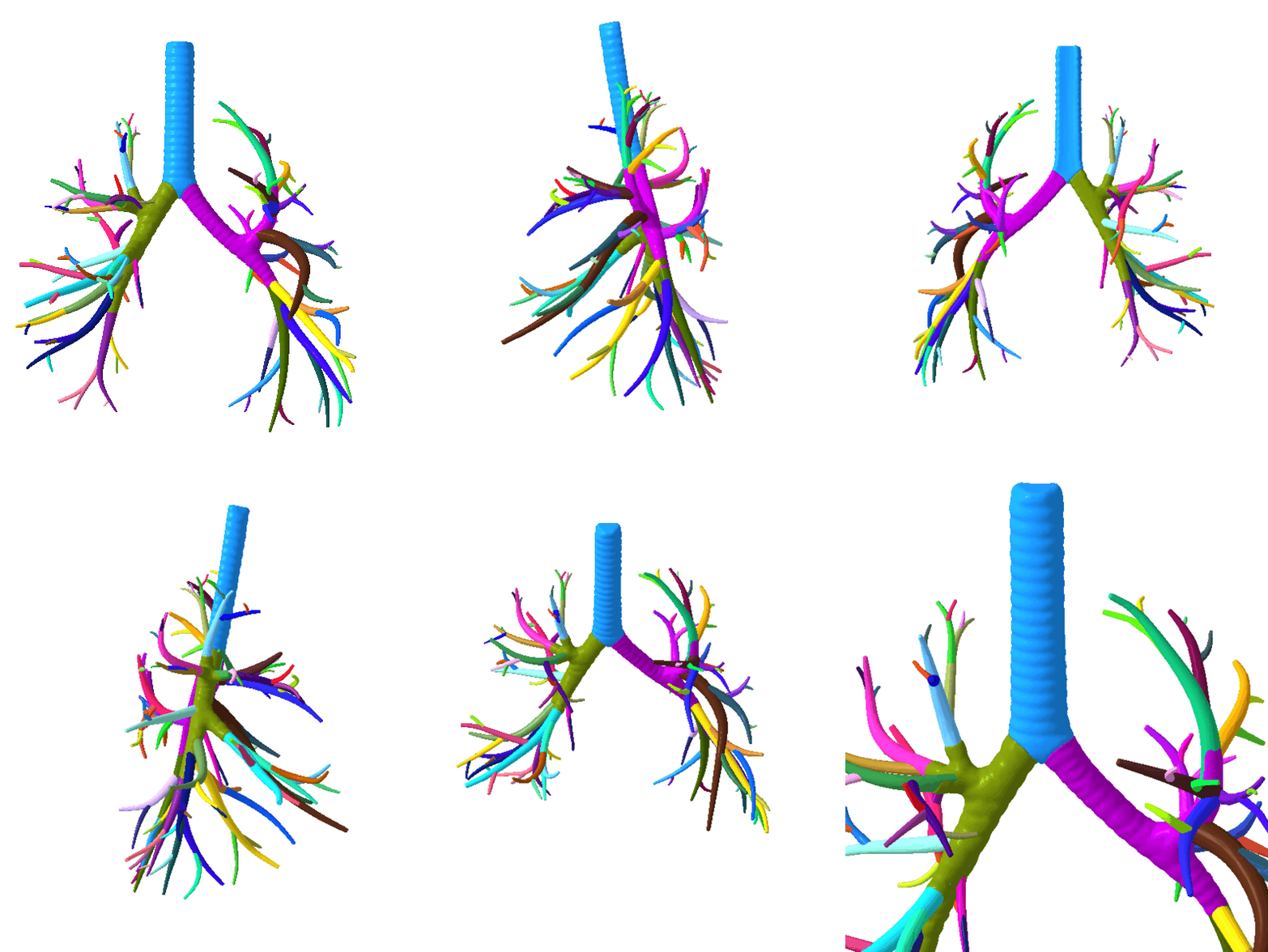
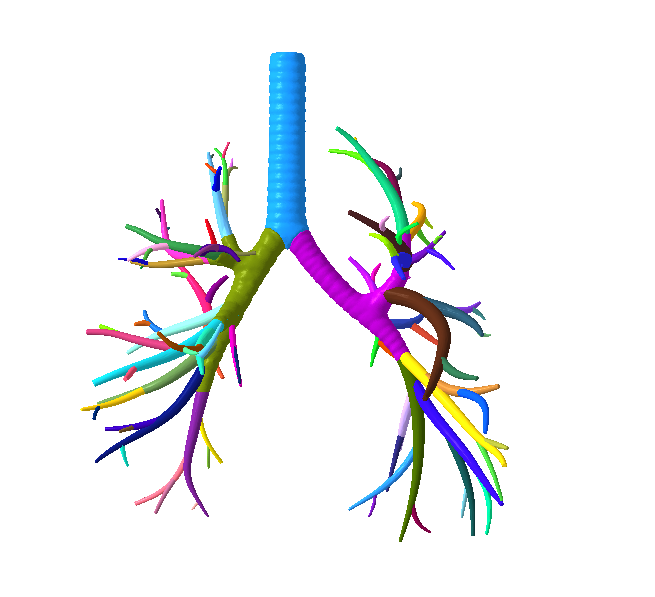
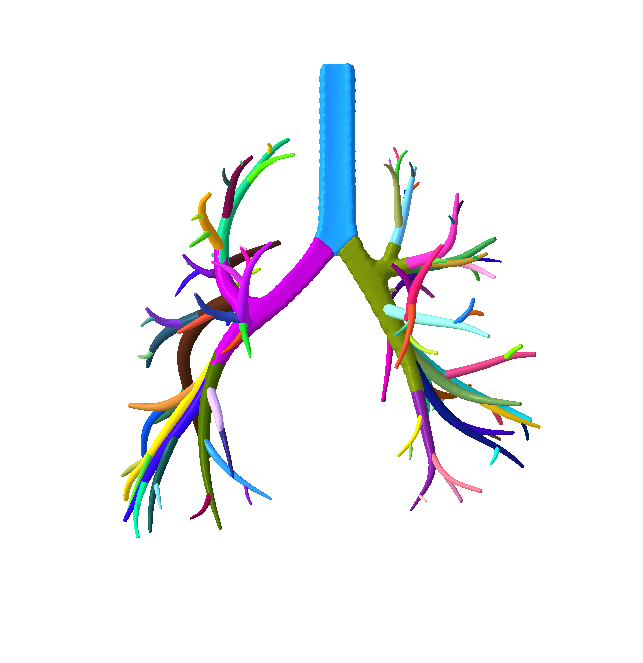
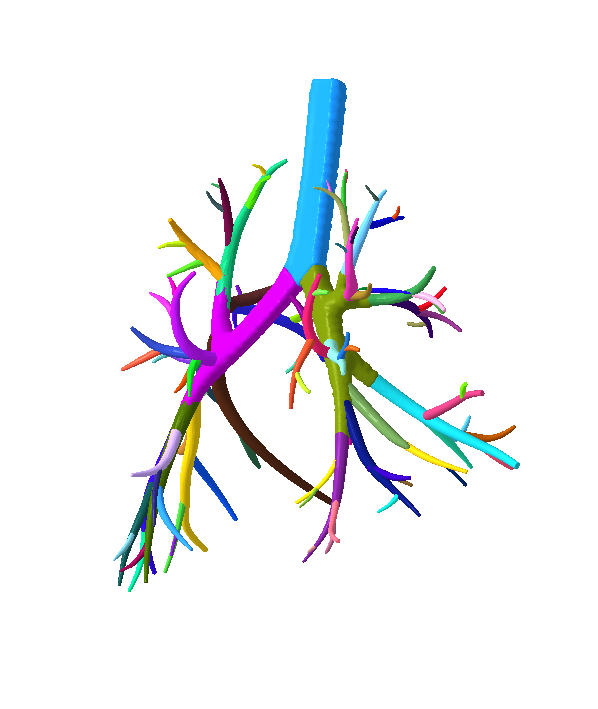
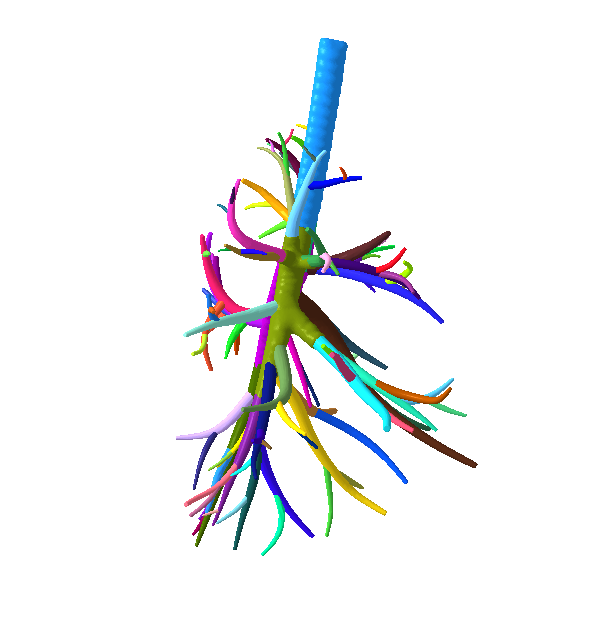
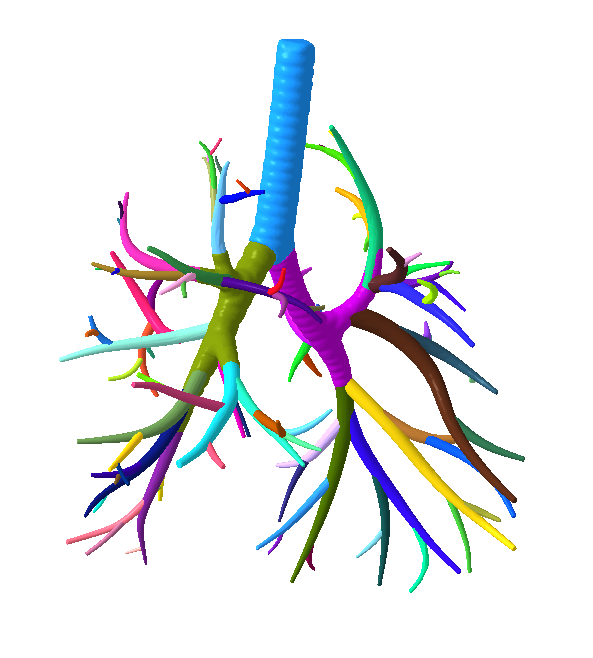
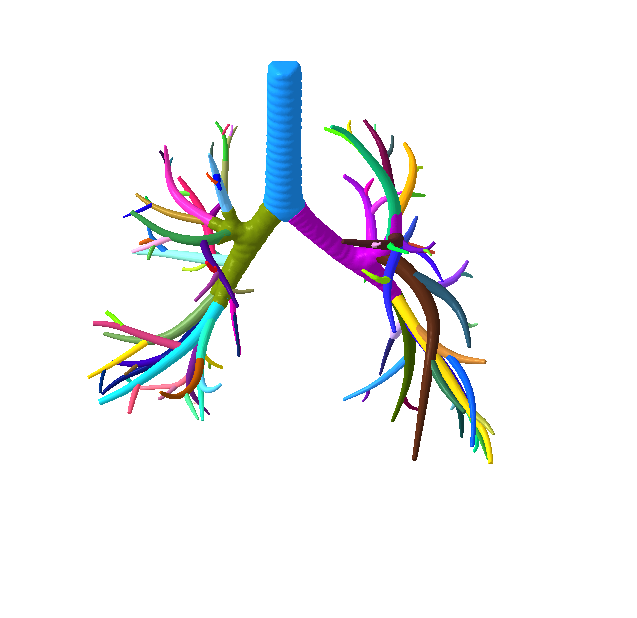
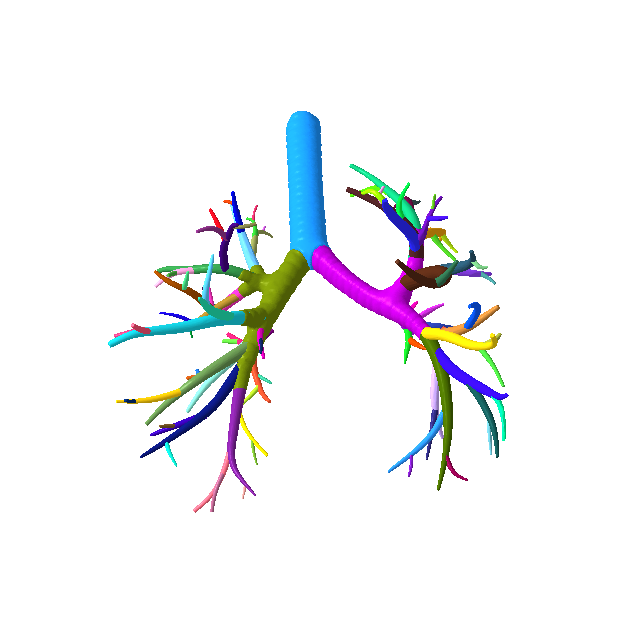
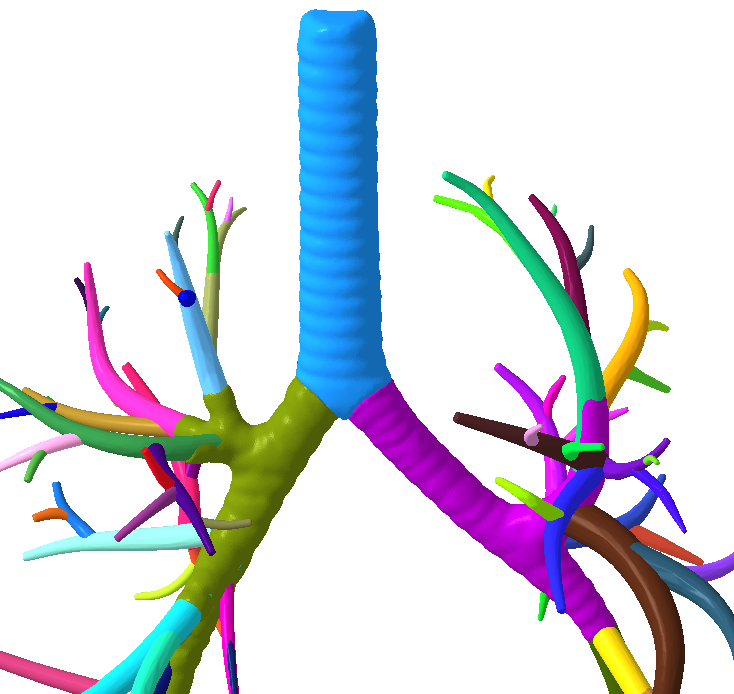
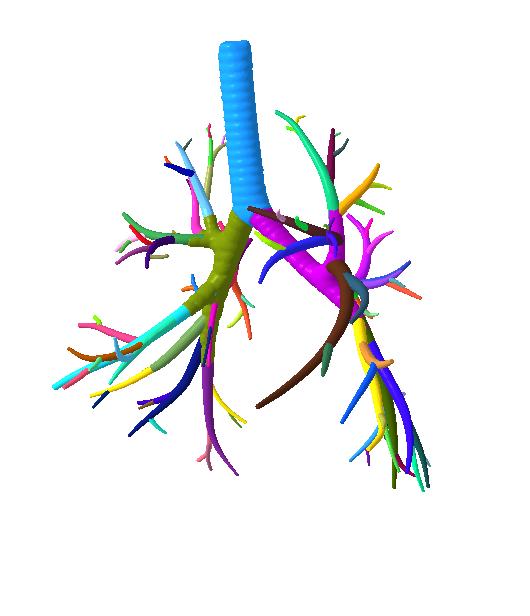
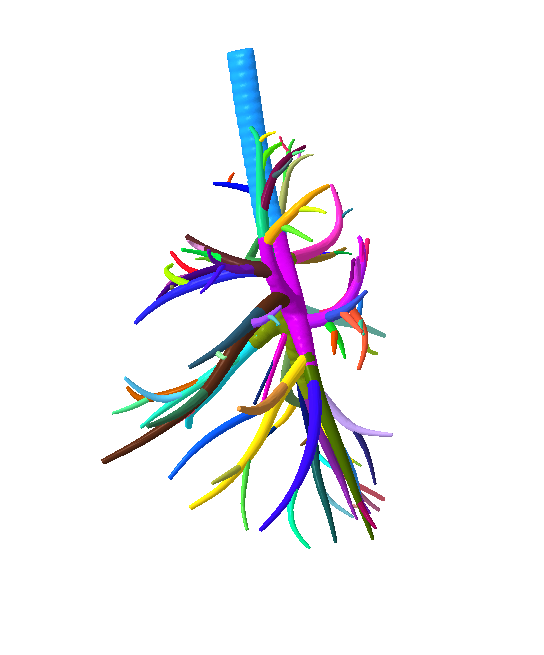
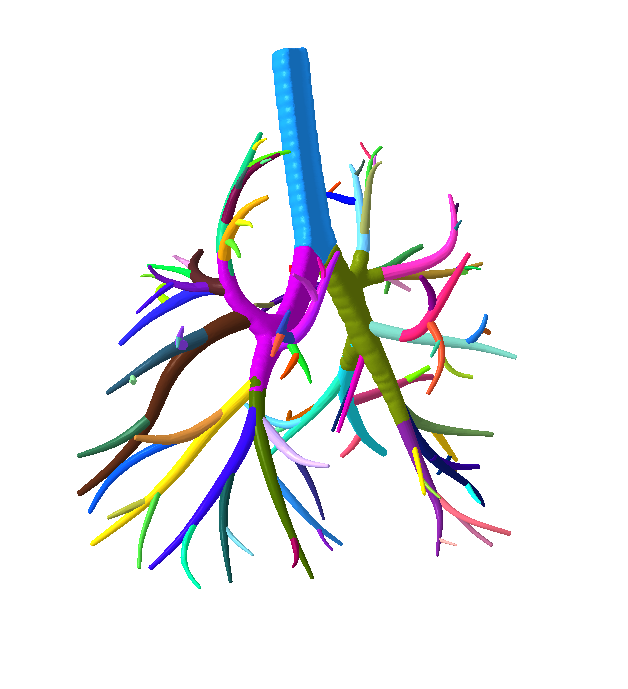
This is very high detailed segmeted model.
Size 837 MB +837 MB without zip.
101 Separate files plus one assembly file.
The tracheobronchial tree is the conducting portion of the respiratory system, a complex network of airways that extends from the larynx (voice box) down into the lungs. Its primary function is to conduct inhaled air to the gas-exchanging surfaces of the lungs (alveoli) and to filter, warm, and humidify that air before it reaches the delicate lung tissue.The tracheobronchial tree is a highly branched, tree-like structure, hence its name. It begins with the trachea and undergoes progressive divisions into smaller and smaller airways.
Trachea (Windpipe):
The main trunk of the tree, about 10-12 cm long and 2-2.5 cm in diameter in adults.
It extends from the larynx (at the level of C6 vertebra) down into the chest, where it typically bifurcates (divides) at the level of the sternal angle (T4/T5 vertebrae) into the two main bronchi. This bifurcation point is called the carina.
The trachea is reinforced by 16-20 C-shaped rings of hyaline cartilage anteriorly and laterally, which prevent it from collapsing, while the posterior part is membranous and flexible (trachealis muscle) to allow for esophageal expansion during swallowing.
It is lined with pseudostratified ciliated columnar epithelium with goblet cells, which produce mucus to trap particles and have cilia that move the mucus upwards (mucociliary escalator) for expulsion.
Main (Primary) Bronchi:
The trachea divides into the right main bronchus and the left main bronchus.
The right main bronchus is typically shorter, wider, and more vertical than the left, which explains why aspirated foreign objects more frequently lodge in the right lung.
The left main bronchus is longer, narrower, and more horizontal, passing under the arch of the aorta.
Like the trachea, they are supported by C-shaped cartilage rings and lined with ciliated epithelium.
Lobar (Secondary) Bronchi:
Each main bronchus then divides into lobar bronchi, which supply the lobes of the lungs.
The right main bronchus typically gives rise to three lobar bronchi (superior, middle, inferior) to supply the three lobes of the right lung.
The left main bronchus divides into two lobar bronchi (superior, inferior) for the two lobes of the left lung.
Segmental (Tertiary) Bronchi:
Lobar bronchi further divide into segmental bronchi, each supplying a specific bronchopulmonary segment within a lung lobe. Each lung typically has 10 bronchopulmonary segments (though variations exist).
Bronchioles:
The segmental bronchi continue to divide, becoming progressively smaller in diameter (less than 1 mm) and losing their cartilage support. They are instead supported by smooth muscle.
Terminal Bronchioles: The smallest conducting airways.
Respiratory Bronchioles: The transition zone, where gas exchange begins to occur as a few alveoli bud off their walls.
Alveolar Ducts and Alveolar Sacs:
Respiratory bronchioles lead to alveolar ducts, which terminate in alveolar sacs (clusters of alveoli). The alveoli are the tiny, thin-walled air sacs where the primary gas exchange (oxygen and carbon dioxide) between air and blood takes place.
Overall Function:
Air Conduction: Provides a clear, open pathway for air to travel to and from the alveoli.
Air Conditioning: The rich blood supply in the airway walls warms inhaled air. The moist mucous lining humidifies it, and the mucus and cilia trap and remove particulate matter, protecting the delicate alveoli from foreign substances.
Mucociliary Escalator: The coordinated beating of cilia moves trapped particles and mucus upwards towards the pharynx to be swallowed or expelled.#TracheobronchialTree #RespiratorySystem #Airways #Trachea #Bronchi #Lungs #Respiration #Breathing #PulmonarySystem #Anatomy #HumanAnatomy #RespiratoryHealth #MucociliaryEscalator #Alveoli #Bronchioles #LobarBronchi #SegmentalBronchi #GasExchange #RespiratoryTract #Windpipe #Carina #Cilia #GobletCells #HyalineCartilage #LungAnatomy #Physiology #MedicalScience #Pulmonology #RespiratoryDiseases #Asthma #Bronchitis #COPD #LungCancer #Inhalation #Exhalation #AirConduction #Humidification #Filtration #Oxygenation #Ventilation #PulmonaryDisease #RespiratoryCare #ThoracicAnatomy #HumanBody #BiologicalSystems #AnatomyAndPhysiology #MedicalEducation #ClinicalPulmonology #AirwayManagement



:format(webp)/https://fbi.cults3d.com/uploaders/37864523/illustration-file/6825bd51-4f32-4c74-ad61-e6982ca824c7/Gif.gif)