Glory to Ukraine!
This video is dedicated to the review of the case for the point three hundred norma magnum ammunition. The case is designed for twenty-two rounds of ammunition. The case is positioned on the very front for use during training, storage of ammunition for it, secondary function.
Review - https://youtu.be/voI5_YKBDw8
Technical characteristics of the case:
Weight - one hundred and ten grams.
Width - eighty-two and a half millimeters.
Length - eighty-eight millimeters.
Height - ninety-nine millimeters.
Number of rounds - twenty-two pieces.
Material - Polyethylene terephthalate + thermoplastic elastomer
Lid fixation - sliding mechanism with self-locking mechanism
Case description:
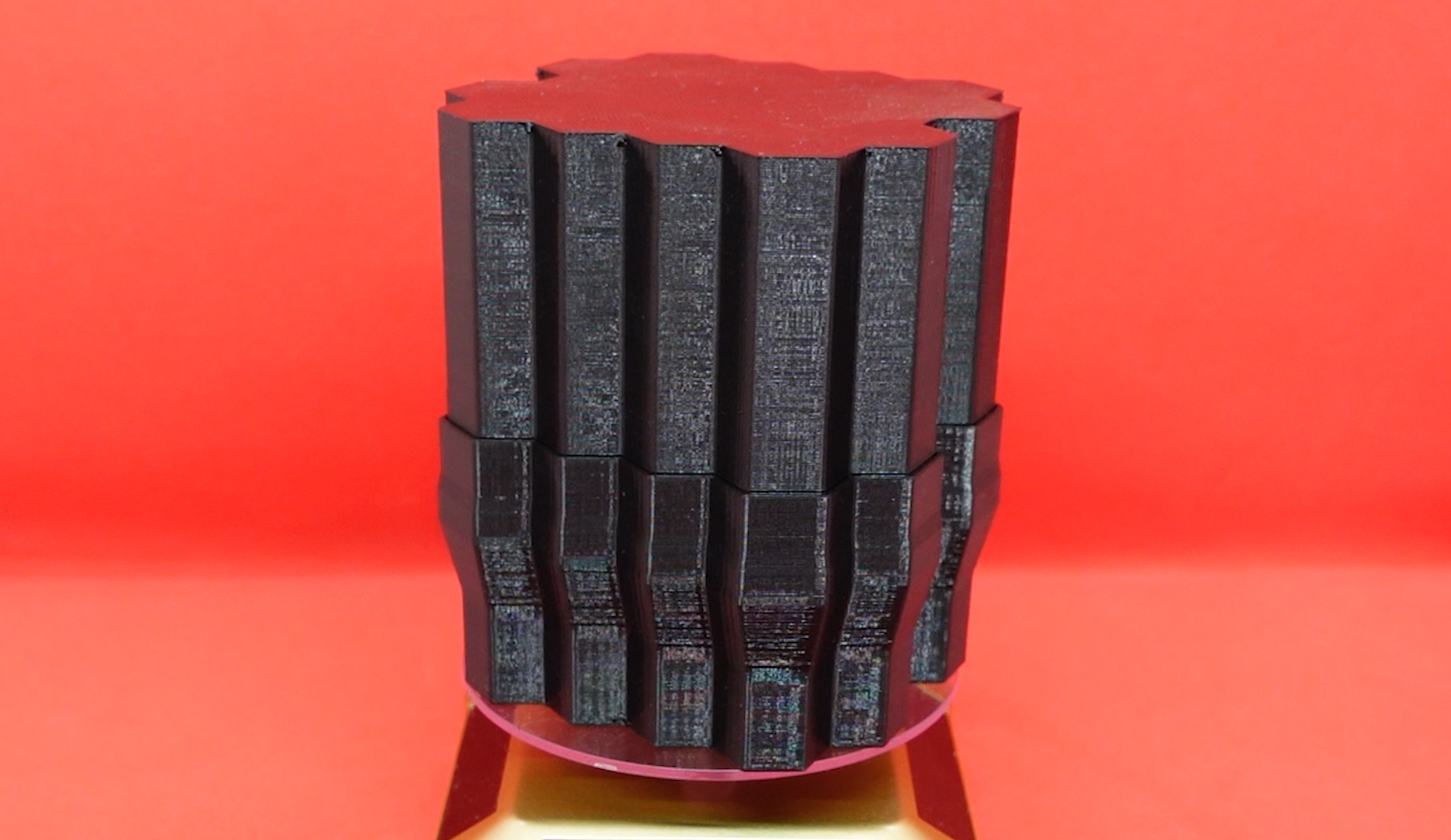
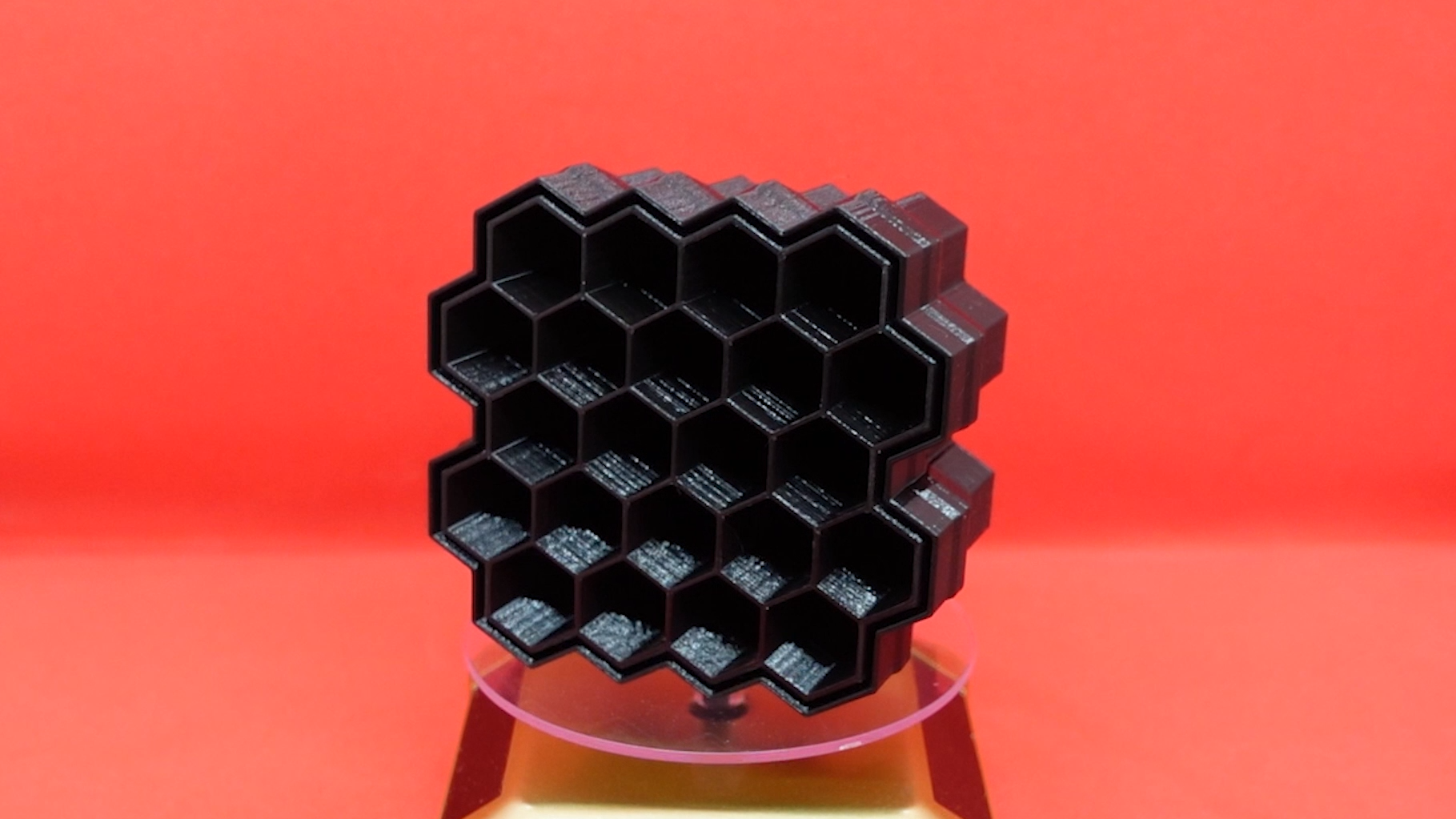
The case has a honeycomb internal structure, which is exactly the structure used by nature, because it allows you to maximize the efficiency of placing round objects to each other. Also, this structure significantly increases the strength of the structure and, importantly, this layout allows you to make cases as light as possible. The upper part of the case is independently fixed on the lower part. Thanks to the honeycomb structure of the side surfaces of the case parts, the contact area between them is significantly increased, which creates an additional friction force that tightly holds the case parts together and does not prevent them from being separated by hand if necessary.
When closed, the case protects its contents from dust and dirt. This is very important when working with it outdoors, in different weather conditions, and can greatly affect the performance of precision shooting in general. When the case is open, the upper part of the case can be inserted into the lower part on the other side. Thus, the chance of losing the top part is significantly reduced. In this state, the height of the case will be 97 mm.
The lower part of the case has a honeycomb structure that holds the shells along its entire height and is 48 millimeters high, so it reaches the shoulders of the .300 Norma Magnum cartridge case. Also on the bottom of the case, there is a locking skirt that engages with the top of the case. The inner wall of the skirt is made thicker so that it does not deform when the upper part of the case is removed and works as long as possible.
The internal cavity of the case is made in such a way that the spent cartridge cases do not fall out of their honeycomb when the case is turned upside down, because they rest against the top cover and fall back into place when the case is returned to its normal position.
The bottom of the lower part of the case has a continuous honeycomb structure, which makes it super rigid and makes it impossible to press it inside the case during transportation or operation.
The upper part of the case has an outer wall that repeats the honeycomb profile of the lower part and engages with the fixing skirt of the lower part of the case. The edge of the profile has a chamfer that facilitates the process of connecting the two parts of the case.
Outside the top of the case, there is a special protrusion that allows the owner to control the skew of the top of the case and informs whether the case is closed.
The honeycomb structure of the top wall profile makes the wall relatively flexible, which increases its ability to dynamically deform, in which it returns to its normal position after you stop squeezing it.
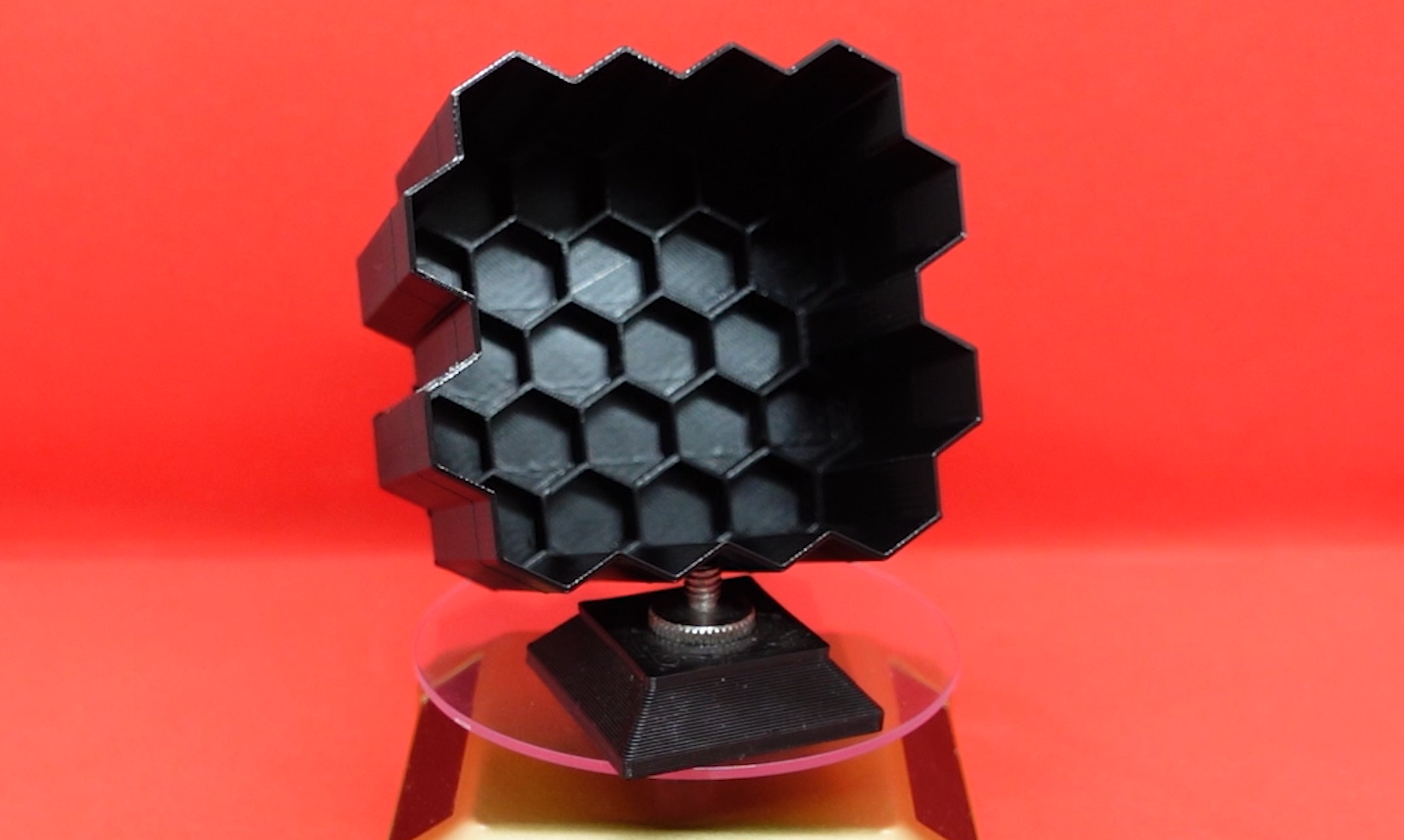
The end wall of the upper part of the case also has a corresponding honeycomb structure that performs three functions simultaneously. The first function is to significantly increase the elasticity of the end wall. Thanks to the honeycomb, the relatively thin end wall cannot be crushed or broken by hand. The second function is to hold the shell casings without bullets while flipping the case. The third function is that the honeycomb is held by special dampers, which in turn keep the bullets from contacting the hard wall of the upper part of the case.
The dampers in contact with the bullets are made in such a way as to dampen the force of contact of the loaded ammunition with the hard parts of the top cover of the case. If the shooter drops the case on the ground and it falls with the top part down, the ammunition will be absorbed by the dampers and the chance that the bullet will somehow change its position relative to the case will be significantly reduced, which can have a qualitative impact on the effectiveness of precision shooting.
The damper does not have a homogeneous structure. On the one hand, it has a thickness of only 0.2 mm of soft "rubber" with a Shore A 80 hardness, and on the other hand, it is already 0.6 mm thick. Thus, the user of the case can choose the stiffness of the dampers. Inside, the dampers have a honeycomb with a diameter of 6 millimeters, which acts as an additional shock absorber if the cartridge case is hit by a bullet very hard, for example, during a fall, as described earlier. The height of the damper is 5 millimeters, but the seat for it, i.e. the honeycomb structure of the top of the case, is 10 millimeters. Thus, the user can replace the standard damper with any other damping element. For example, this may be necessary if the case is used for another cartridge whose case has the same diameter, but the overall length of the cartridge is different from the Norma Magnum.
:format(webp)/https://fbi.cults3d.com/uploaders/23078667/illustration-file/167aa821-462e-43c8-bd4c-fb9a85512a1f/doc_2023-05-23_19-32-31.png)
/https://preview3d-images.cults3d.com/w03859qexd9ai6wtpecrme2xuwsj)
/https://preview3d-images.cults3d.com/jb7vp4e1sgz9bbdy2fe9aptcjgd6)
/https://preview3d-images.cults3d.com/n9xnlq4yo0boghzsm40gd8lh8j9o)
/https://preview3d-images.cults3d.com/9mhji85pr3h2zvo7gjx9hr8fzxfz)
/https://preview3d-images.cults3d.com/5s0w1ftm9wk57aazfm5yddx9uoeb)
/https://preview3d-images.cults3d.com/w2m8wrmif6nzyemf92qzlsn2rxs2)
/https://fbi.cults3d.com/uploads/user/avatar/23078667/photo_2024-01-07_20-26-35.jpg "shurf_dnepr")


:format(webp)/https://fbi.cults3d.com/uploaders/23078667/illustration-file/a814f2ab-f685-44ac-9a55-b6dd83477eed/photo_2022-08-20_12-03-37.jpg)
:format(webp)/https://fbi.cults3d.com/uploaders/23078667/illustration-file/576dd7ee-e572-4371-8a61-236d81f5e7d3/photo_2022-08-31_10-38-31.jpg)
:format(webp)/https://fbi.cults3d.com/uploaders/23078667/illustration-file/e9fac10a-7544-4a83-9d0d-344b82c62678/%D0%B8%D0%B7%D0%BE%D0%B1%D1%80%D0%B0%D0%B6%D0%B5%D0%BD%D0%B8%D0%B5_viber_2022-03-22_23-22-38-160.jpg)
:format(webp)/https://fbi.cults3d.com/uploaders/23078667/illustration-file/241913da-e240-4881-97b2-a7179f0b2072/%D0%B8%D0%B7%D0%BE%D0%B1%D1%80%D0%B0%D0%B6%D0%B5%D0%BD%D0%B8%D0%B5_viber_2022-03-22_23-22-37-769.jpg)
:format(webp)/https://fbi.cults3d.com/uploaders/23078667/illustration-file/a8ee1c88-d78d-4500-b32d-a46f9cc07055/photo_2023-10-21_09-06-44.jpg)
:format(webp)/https://fbi.cults3d.com/uploaders/23078667/illustration-file/4b5572a3-4d07-4dec-bd4f-95d6c3931f0d/photo_2023-11-19_17-12-59.jpg)
:format(webp)/https://fbi.cults3d.com/uploaders/23078667/illustration-file/64cd6584-3740-45bc-8207-5d168ac63d2f/frame.png)
:format(webp)/https://fbi.cults3d.com/uploaders/23078667/illustration-file/7b0944a3-6e2e-4117-9a15-7b05b59ddced/%D0%B8%D0%B7%D0%BE%D0%B1%D1%80%D0%B0%D0%B6%D0%B5%D0%BD%D0%B8%D0%B5_viber_2022-03-22_23-22-37-769.jpg)