#BEACHXCULTS
I am blind, and I design my models in OpenSCAD because code is CAD that a screen reader can read. After my braille crocodile I wanted a sea turtle as an entry to the beach competition, and while I was wondering what the scutes of a turtle shell could actually do, the answer turned out to be: they can count. The marginal scutes along the shell rim became the beads of an abacus, and the turtle became a counting frame you can hold in one hand.
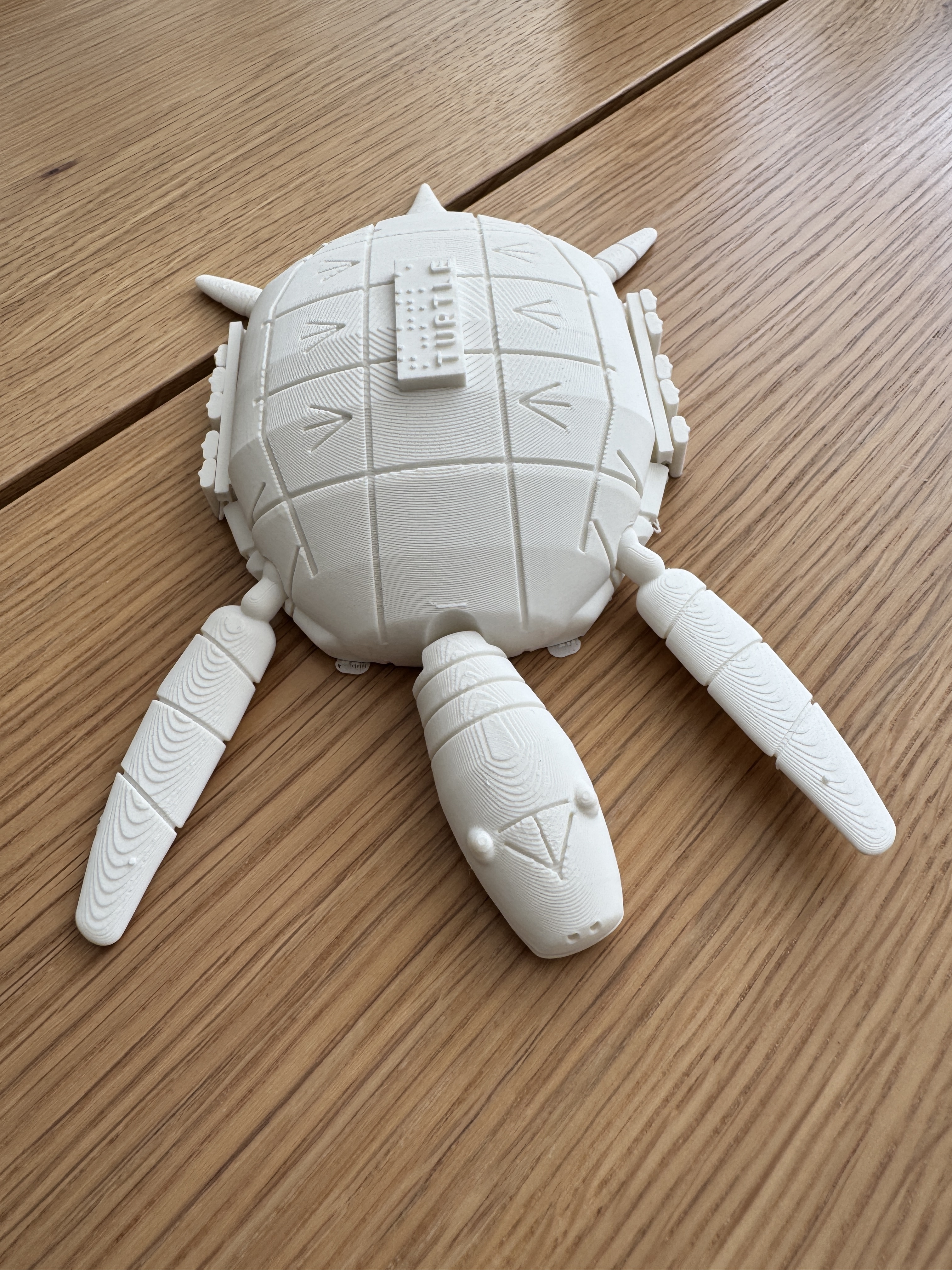
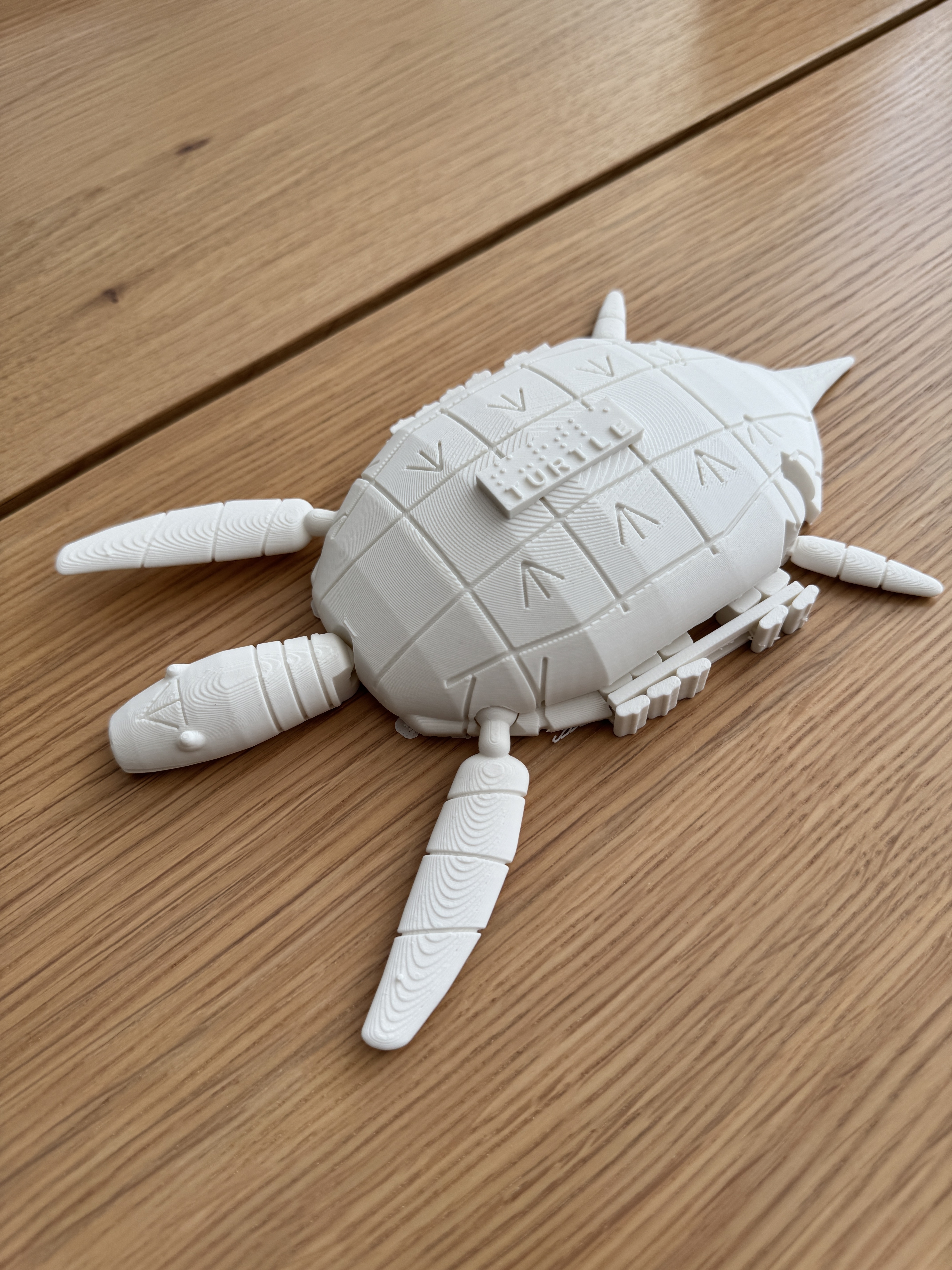
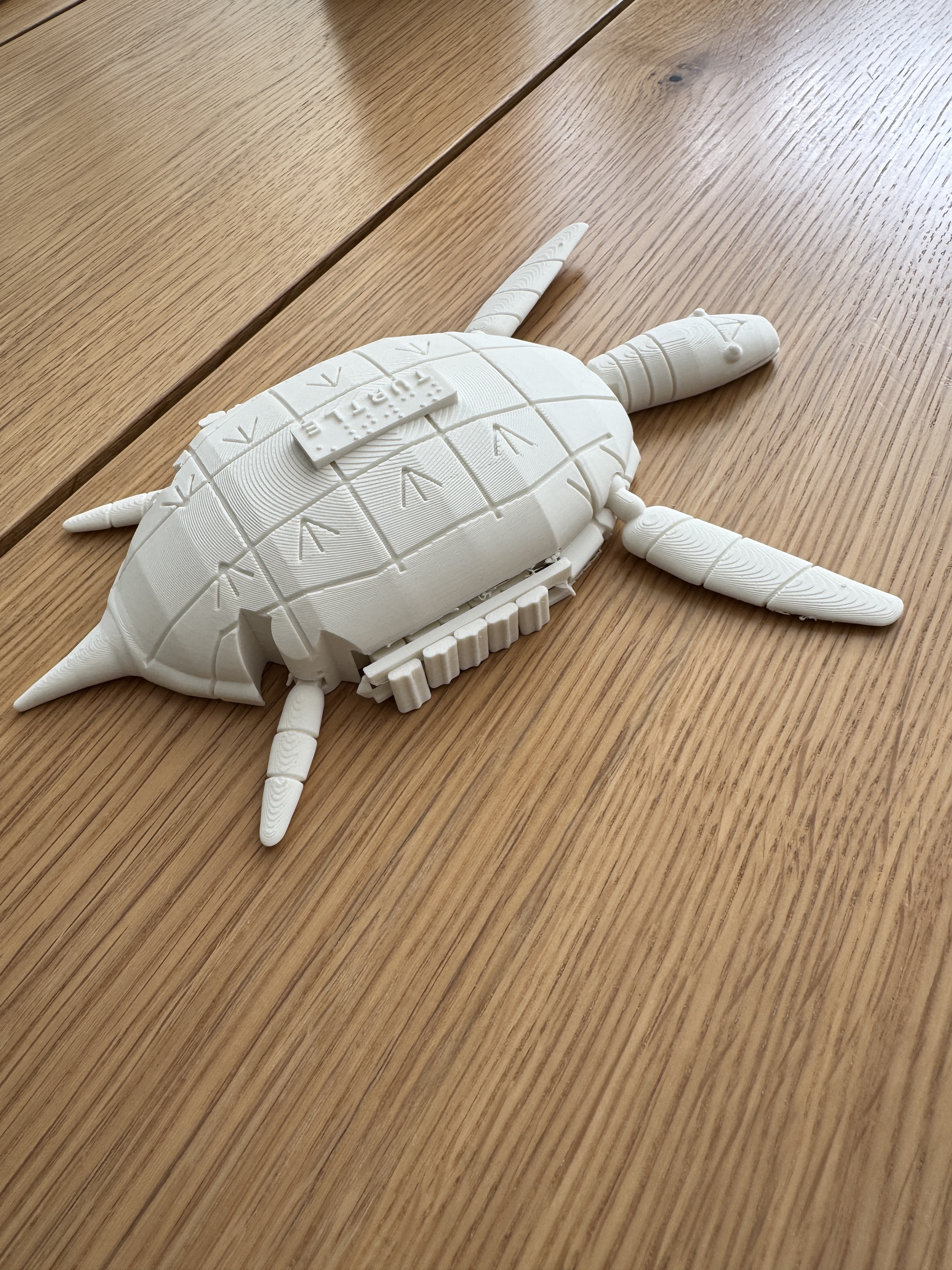
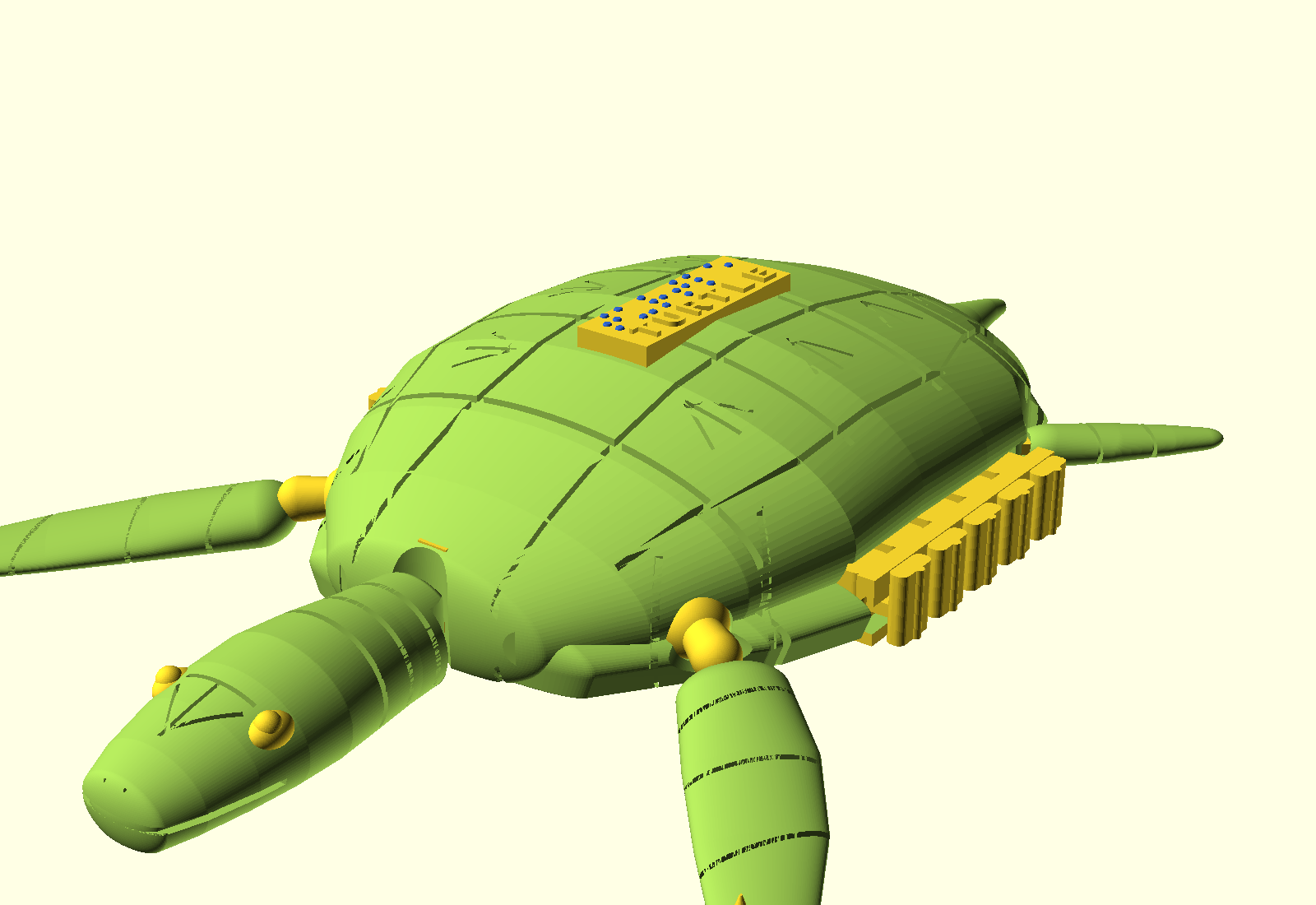
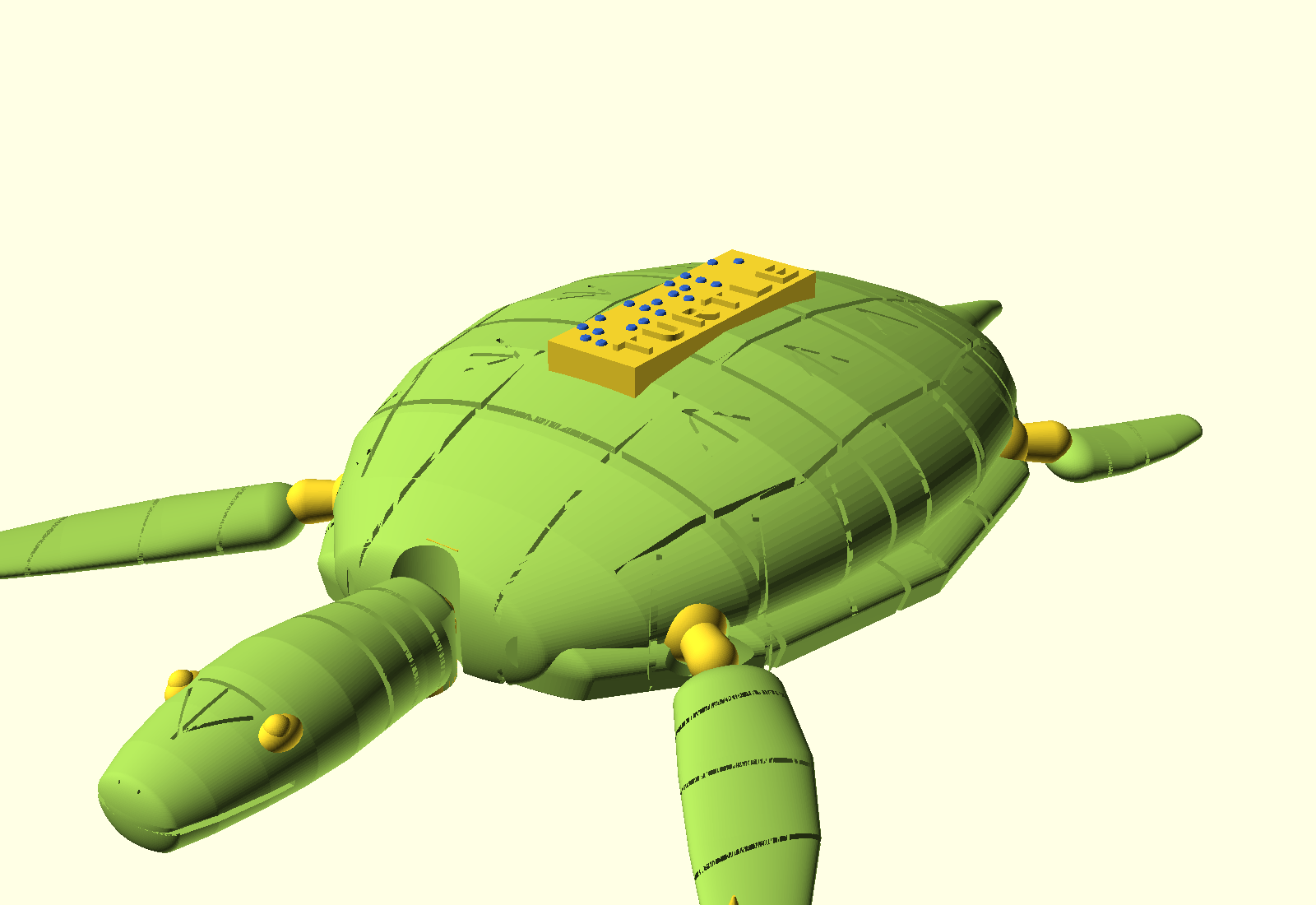
Five tiles slide along a covered rail on each side of the shell, ten in all, arranged like a rekenrek: two rows of five. Slide tiles toward the head to count them; the gap in the row is what your fingers read. One full side is five, so eight is felt as "a full side plus three" instead of eight separate things, and whatever stays behind is automatically the friend of ten. The tiles are completely captive: each one stands inside a roofed gallery and reaches through a slot in the rim rail, so nothing can fall out, be swallowed, or get lost. There are no springs, no detents, and no loose parts - just tiles that slide with a satisfying scrape and stay where you put them.
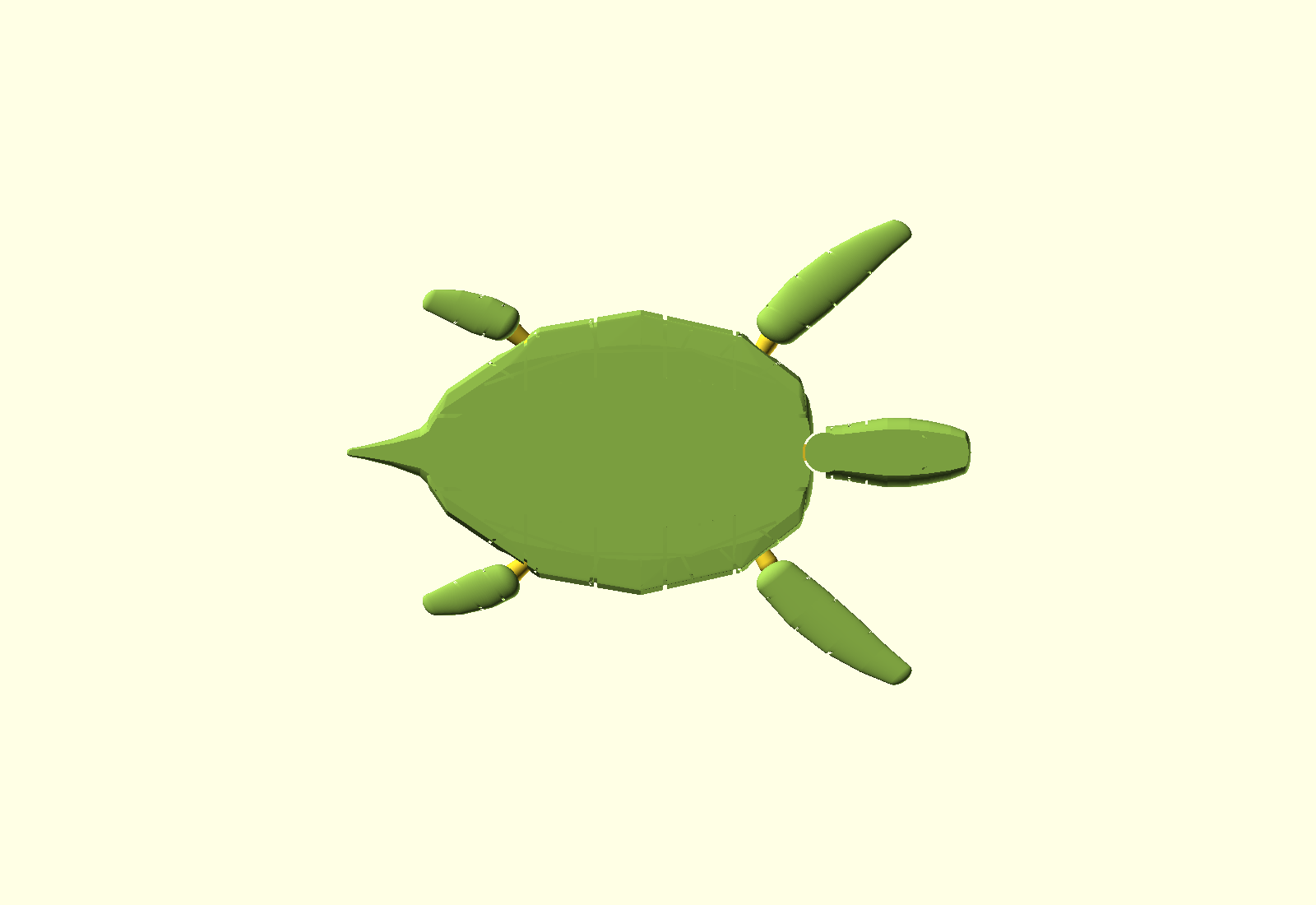
And it is still every bit a sea turtle: a head that swings side to side on a hidden pin joint, long front flippers on ball joints in a gliding pose, rear flippers on captive ring joints, carved scute seams and radiating streaks across the whole dome, a beak line, eyes, and nostrils. The spine carries a raised plate with the word TURTLE twice: once in signage-grade braille to ISO 17049 (0.6 mm dots that stay exactly that size no matter how large you print), and once in raised capital print letters, so braille readers and print readers share the same toy.
The download also includes the flexi variant: the same turtle without the abacus, with all four flippers on ball-and-socket joints for maximum wiggle, same braille and print word plate, same carved shell.
How the counting works
- Rest position: all tiles slid toward the tail
- Count by sliding tiles toward the head, one per number
- One full side is five: numbers six to ten are "one full side and some more"
- Friends of ten: slide seven forward and the three left behind are the answer to "how many more make ten"
- Simple sums within ten: slide three, slide four more, read seven
What is included
STL files:
sea_turtle_abacus_230mm - the counting abacus turtle, 230 mm, print in placesea_turtle_braille_180mm - the flexi braille turtle, 180 mm, print in place
OpenSCAD source files are also included so you can change words, sizes, and clearances:
sea_turtle_braille_abacus.scadsea_turtle_braille_articulated.scad
Customization
Open the OpenSCAD Customizer and everything is a parameter: the word on the back plate (any language using a to z plus the Danish ae, oe, and aa; the raised capitals can be switched off), the total length (abacus 150 to 400 mm, flexi 120 to 400 mm), and every joint and sliding clearance if your printer runs tighter or looser than mine. The braille dots and all moving clearances hold their true millimetre size at any print scale, because the source scales the body while counter-scaling everything that must stay absolute. The sources are commented and structured for screen reader users.
Printing
Prints flat on the belly in one piece, a bit of tree support is needed for best quality. All moving clearances are sealed against support material, so supports cannot damage the mechanism either way. Print the abacus with a normal first layer rather than an aggressively squished one: the sliding tiles stand directly on the build plate, and a heavy first layer can make their first slide stiff. After printing, swing the head, wiggle the flippers, and push each tile firmly along its rail once to free it - after that first pass they slide smoothly.
About this design
This is my own original design: a parametric, customizable, 3D printed counting toy in the shape of a fully articulated print-in-place sea turtle, with ten captive sliding number tiles, ISO 17049 braille, and raised print letters, designed end to end in screen-reader-accessible OpenSCAD by a blind maker. If it helps a child feel their way from one to ten while a turtle swims across the table, it has done exactly what it was built for.
:format(webp)/https://fbi.cults3d.com/uploaders/47421798/illustration-file/69345ef1-4aba-4904-975d-540be01e2beb/White-3D-printed-parametric-OpenSCAD-braille-sea-turtle-counting-abacus-with-articulated-flippers-ta.jpg)
/https://preview3d-images.cults3d.com/lg7a0gd7i9hyc3hq5oe1pfp6vq0n)
/https://preview3d-images.cults3d.com/fhemfazsf8qwbyqgpbfv5xig3ca9)
/https://preview3d-images.cults3d.com/npg1f1s4yd498t1s9cay6dzj2j24)
/https://preview3d-images.cults3d.com/7pkkg2t7oxwwl319xn109n0uisdq)
/https://fbi.cults3d.com/uploads/user/avatar/47421798/Profilbillede_til_LinkedIn_og_CV_-_Edis1.JPG "Accessible3d")


:format(webp)/https://fbi.cults3d.com/uploaders/47421798/illustration-file/ac653439-5700-4b4a-9b83-415653729317/1d06f99a-5492-4a18-a26d-4a7850841e60.jpg)
:format(webp)/https://fbi.cults3d.com/uploaders/47421798/illustration-file/e167aa8a-4dca-457f-9667-47d93272b3c7/Accessible-3D-printed-chess-set-in-starting-position-on-a-tactile-peg-in-hole-chess-board.-White-pie.jpg)
:format(webp)/https://fbi.cults3d.com/uploaders/47421798/illustration-file/2563d436-d60d-4188-ade9-f6de38b1459b/accessible-braille-business-card-with-qr-code-front-view-3d-printed.jpg)
:format(webp)/https://fbi.cults3d.com/uploaders/47421798/illustration-file/e3262182-1146-45d3-bf6e-77e47abd1613/Close_up_of_the_3D_printed_lamp_base_showing_the_functional_screw_threads_and_white_LED_insert_with_.jpg)
:format(webp)/https://fbi.cults3d.com/uploaders/47421798/illustration-file/4666a530-cafe-4e76-aae9-25794ecfa9f3/Parametric-OpenSCAD-3D-printed-customizable-birthday-plaque-featuring-a-dual-color-diagonal-split-an.jpg)
:format(webp)/https://fbi.cults3d.com/uploaders/47421798/illustration-file/e0723554-a9a9-4ee1-ace9-f4ef159b058c/Accessible-3D-printed-tactile-Stratego-board-game-starting-position-layout-with-high-contrast-Braill.jpg)
:format(webp)/https://fbi.cults3d.com/uploaders/47421798/illustration-file/e525a5ce-fe73-4c00-86d2-2cce6801b885/PARAME~1.jpg)
:format(webp)/https://fbi.cults3d.com/uploaders/47421798/illustration-file/94cd452b-bfda-4e32-a9c0-aed14d4a2fa0/3D-printed-stroller-cup-holder-adjustable-split-clamp-and-mounting-hardware-on-baby-pram-handlebar-c.jpeg)