A proven, builder‑friendly 737 nosewheel tiller for home flight sims — simple, robust, and faithful to the feel of the real thing.
Original design by Karl (2015). Published by 737DIYSIM.
Overview
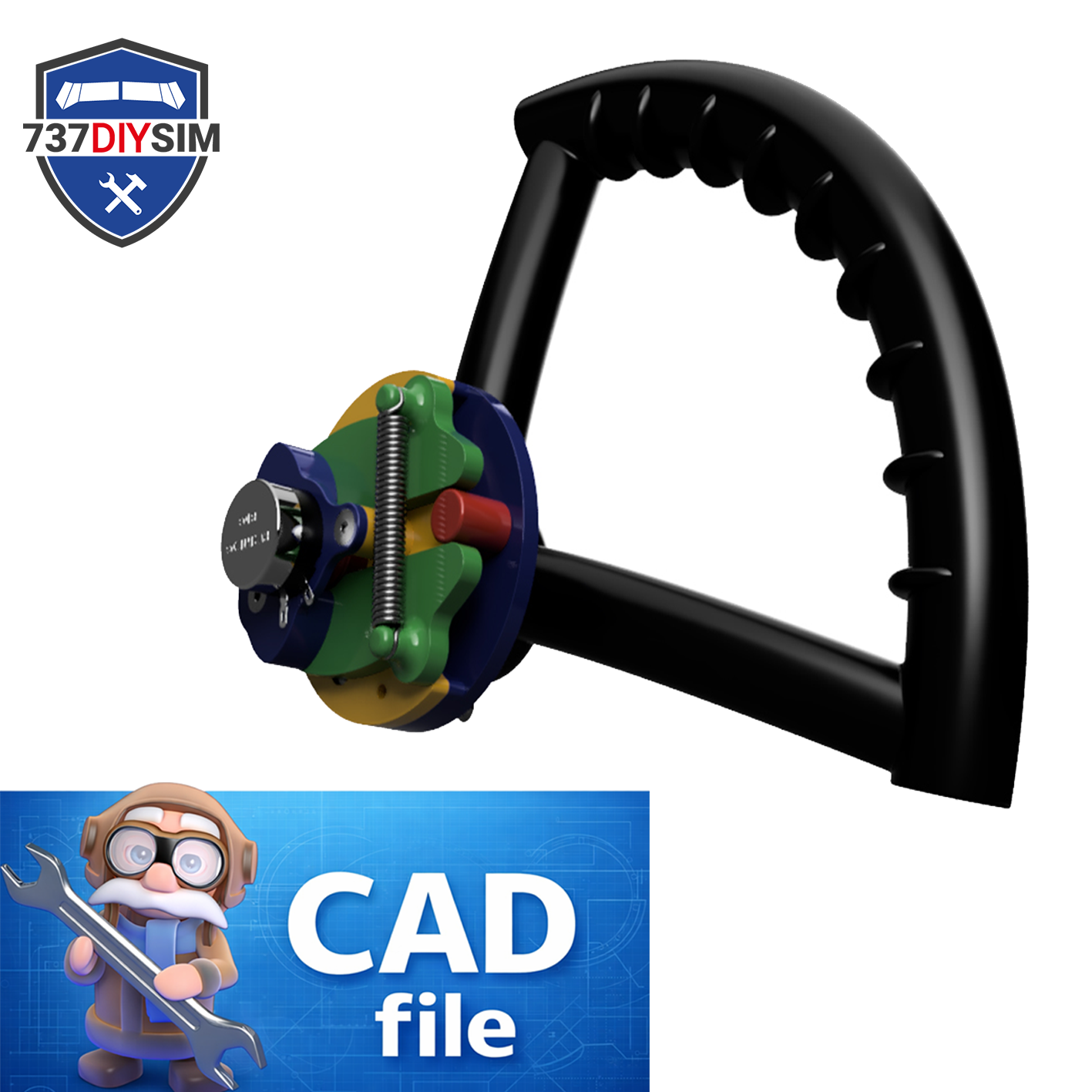
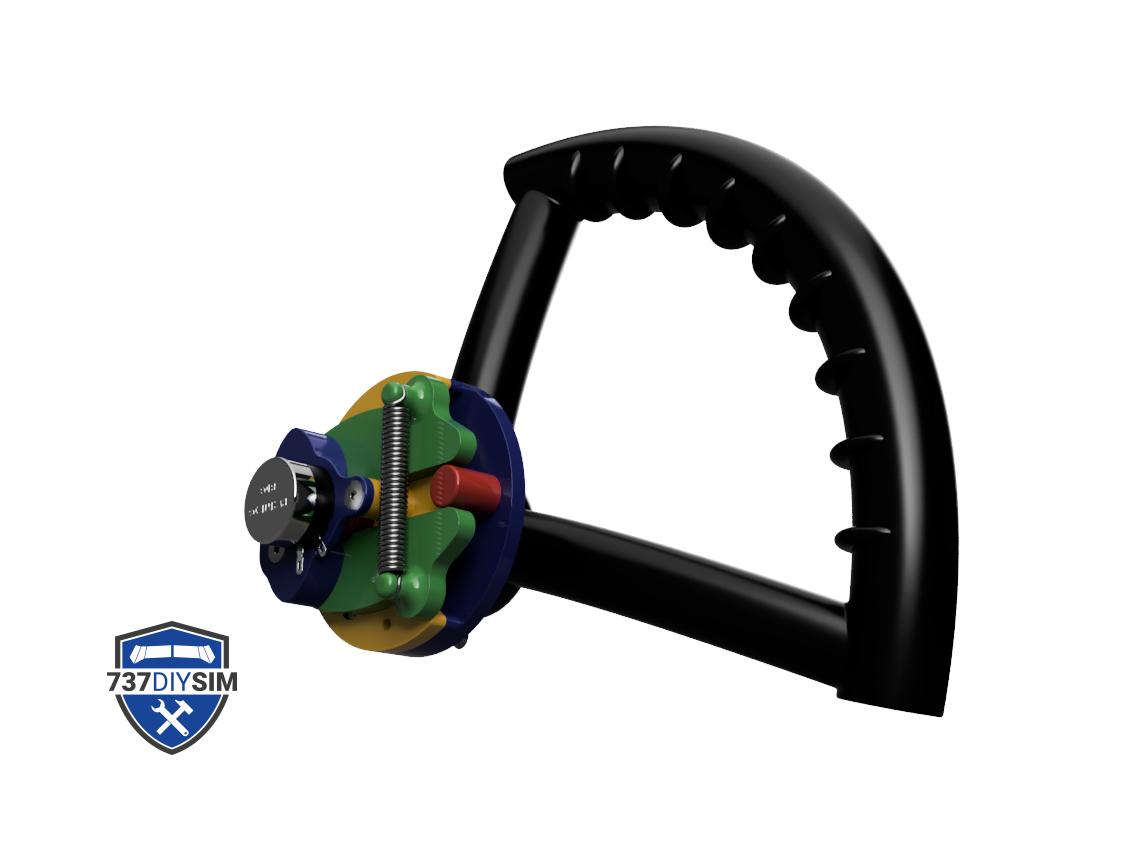
Karl’s very first tiller from 2015—created even before the 737DIYSIM website launched—remains one of the most downloaded builds of all time. Its enduring popularity comes from a blend of clever engineering and straightforward assembly, making it a firm favourite among hobbyists who want an authentic taxi experience without complex machining.
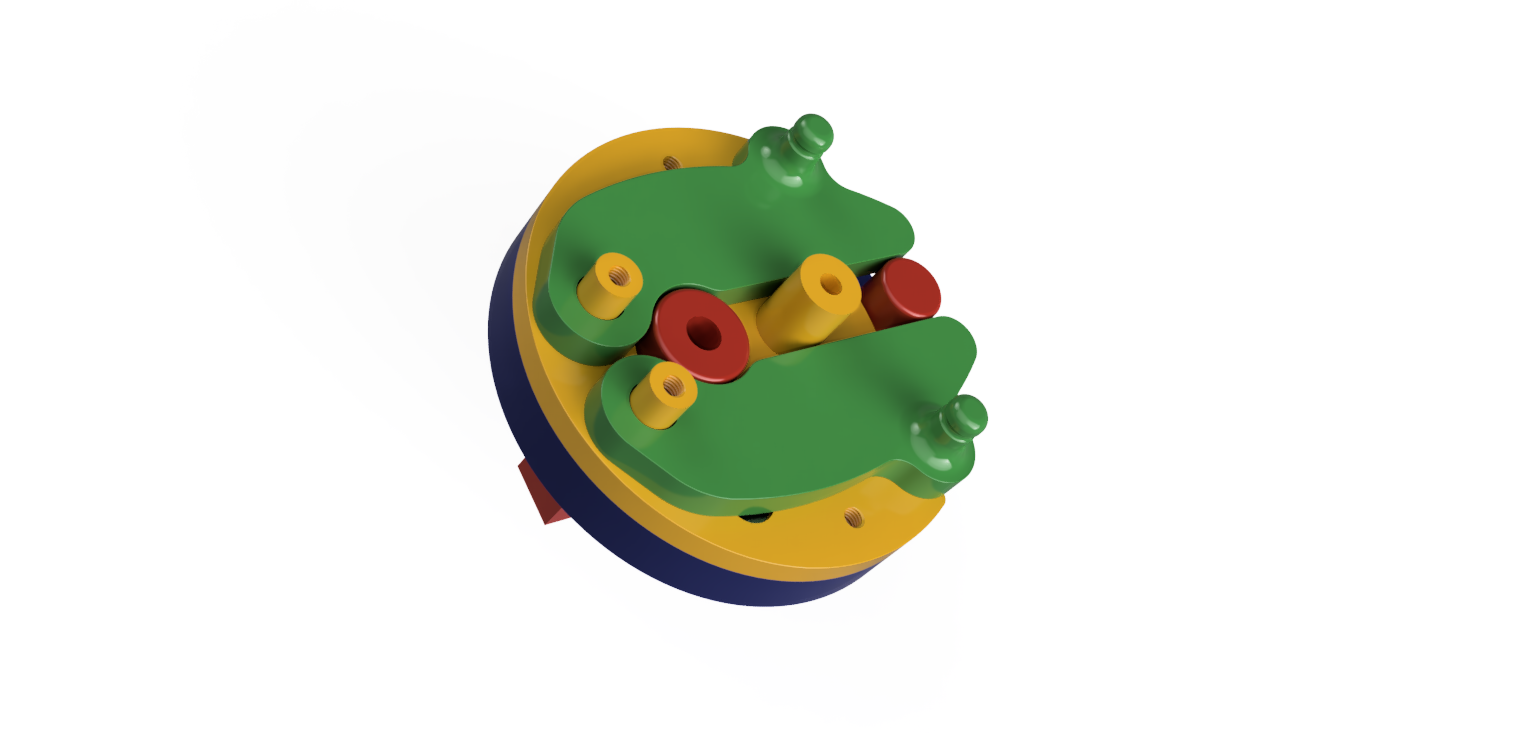
Designed for DIY builders with standard home 3D printers, this mechanism closely replicates the look and motion of the Boeing 737 tiller. While it doesn’t match the extreme torque of the genuine unit, the integrated spring system provides excellent feedback and smooth self‑centring, so taxiing feels natural and responsive from the very first rollout.
Why this is essential for your sim
Realistic ground handling: Control nosewheel steering independently of rudder pedals for precise taxi, tight turns, and realistic crosswind technique.
Builder‑friendly: Designed to be printed on a standard 220 mm bed, assembled with common tools, and wired to a typical analogue input interface.
Time‑tested: A proven, community‑loved design that balances simplicity with the right tactile cues.
Features
Self‑centring mechanism for smooth, predictable recentring
Analogue operation for fine‑grained input and accurate steering response
Fits a standard 220 mm 3D print bed (Ender‑3 class and similar)
Flexible printing:
Entire unit printable in filament
Handle can be resin‑printed for a premium finish and crisp detail
What’s included (ZIP download)
STL files ready to print
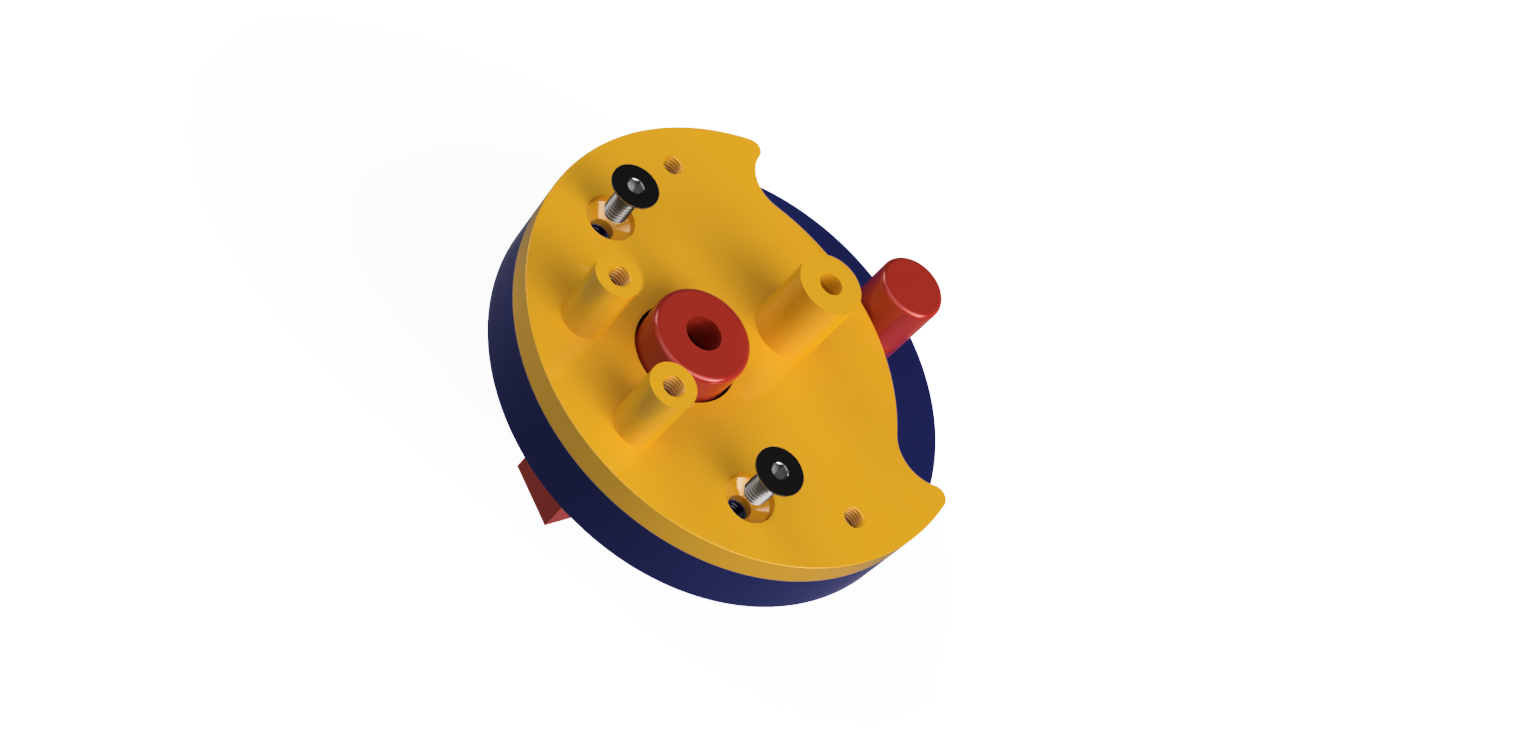
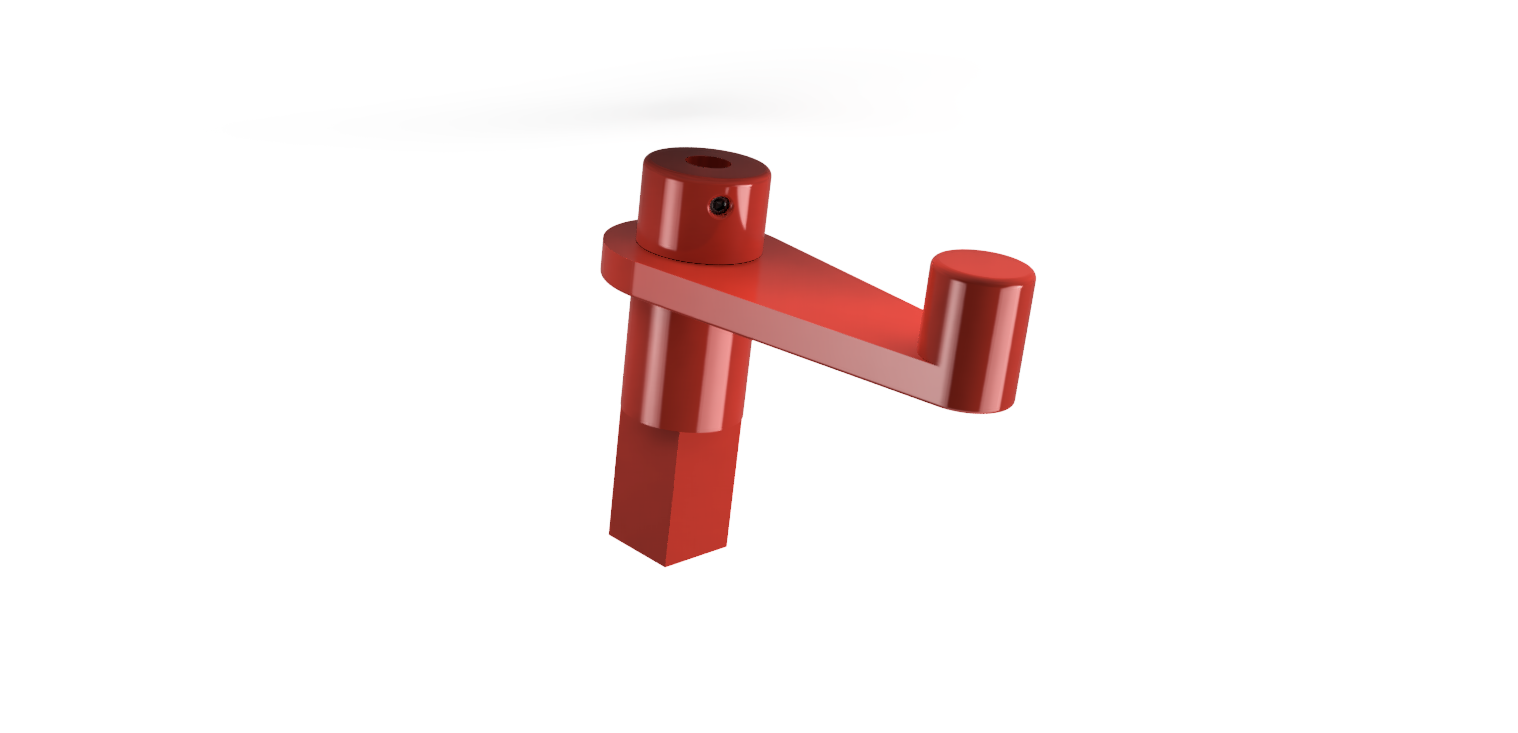
Original CAD models (for reference and customisation)
Original build guide
Wiring diagram (analogue connection)
Everything you need to print, assemble, and integrate the tiller into your sim.
Context of use
Ideal for home cockpits and desktop flight simulator setups (e.g., MSFS, X‑Plane, P3D)
Connects as an analogue axis via your preferred interface (e.g., common USB controller boards)
Complements or replaces rudder‑pedal taxi for more authentic Boeing 737 ground ops
Printing & finishing (guidance)
Printers: FDM printers with a 220 mm bed or larger; optional resin for the handle
Materials: PLA or PETG for the main parts; choose what you trust for strength/stability
Supports: As required for overhangs; orientation is detailed in the build guide
Surface finish: Light sanding and paint as desired; resin handle elevates look & feel
(Use the build guide for precise orientations and any assembly notes.)
Assembly & electronics (guidance)
Mechanical: Straightforward printed assembly with common fasteners
Electronics: Wire the axis per the included wiring diagram to your chosen analogue input
Tuning: Calibrate in your sim for smooth, linear steering response
Limitations (read before building)
Not flight‑certified; for simulation/educational use only
Torque is intentionally lower than the real 737 unit; the spring system provides tactile feedback and centring but is not a 1:1 force replica
Printed parts depend on your printer settings, material, and assembly quality
Inspirations & credits
Original concept & design: Karl (2015)
Publication & curation: 737DIYSIM
Community feedback over the years helped refine printability and the overall builder experience. Thank you!
Remix & attribution
This is an original 2015 design by Karl.
If you create a remix, please credit the original:
“Based on the 737 Tiller Mechanism – Original Design (2015) by Karl / 737DIYSIM.”
Please respect the license selected on this listing for personal/commercial use conditions.
Quick highlights
Simple, enjoyable build — originally designed around the Creality Ender‑3 class
Complete package — STLs, CAD, original build guide, wiring diagram
Flexible printing — all‑filament or resin handle option
Analogue operation & self‑centring for a realistic taxi feel
Once you try taxiing with a tiller instead of relying only on rudder pedals, you’ll instantly feel the difference in control and ease during ground handling.
Download the ZIP and start building. Happy Building!
:format(webp)/https://fbi.cults3d.com/uploaders/47515376/illustration-file/9d976979-ac0d-4291-b386-91f8c0903881/CULTS-SCC-Recovered.png)
/https://preview3d-images.cults3d.com/w5ax30kpsqg29mt2aqgwit77y74e)
/https://preview3d-images.cults3d.com/3mgaj2mlwe2urzawxra4ap62zl4b)
/https://preview3d-images.cults3d.com/dm702cr373s4zj5kcp1qng0f28xb)
/https://preview3d-images.cults3d.com/dtxia0cjfeli55uu2l6n2nnkpli2)
/https://preview3d-images.cults3d.com/a2mwv3y2wivfmy1tkeemzycj22wn)
/https://preview3d-images.cults3d.com/kw8c0n632my0xq1bkpsbsratybiq)
/https://preview3d-images.cults3d.com/5k5vleb8wudw2en7n94ch1w1uwga)
/https://preview3d-images.cults3d.com/94pjdb0tgy2d6jfagx2g9tfxdiuc)


/https://preview3d-images.cults3d.com/dx7t8pgo2tr2nzen4c4731x2fz0r)
/https://preview3d-images.cults3d.com/m9oz8ftpv3mri1vw7sjye43m625o)
/https://preview3d-images.cults3d.com/idwgpybuvjdew05fcrfyb8g1ed97)
/https://preview3d-images.cults3d.com/k03245jqrgh86p6aoekbojj5mtzf)
/https://preview3d-images.cults3d.com/36rr2zfe6b8qyzmixi0xwgb4etfr)
/https://preview3d-images.cults3d.com/cl1xbohb24fr6j3i5yg5ohftlimu)
/https://preview3d-images.cults3d.com/yfist2d8tn160f78q5wqacr3wrlc)
/https://preview3d-images.cults3d.com/wt8qbykj16uu3eqtpl1ttltdnc45)



:format(webp)/https://fbi.cults3d.com/uploaders/47515376/illustration-file/a1283c68-2180-4353-b841-618c2832df42/CULTS-SPM-MTU.png)
:format(webp)/https://fbi.cults3d.com/uploaders/47515376/illustration-file/b2167597-74fe-4949-bbda-41a27c4ca0ab/CULTS-MTU-STL.png)
:format(webp)/https://fbi.cults3d.com/uploaders/47515376/illustration-file/d4d854f6-0e28-44e4-9a15-659124976804/CULTS-CYC-STL.png)
:format(webp)/https://fbi.cults3d.com/uploaders/47515376/illustration-file/e24ee333-a0e7-497d-8b9e-02f0a69ddfb0/CULTS-G1000.png)
:format(webp)/https://fbi.cults3d.com/uploaders/47515376/illustration-file/c9a6384e-7832-4ba8-a560-18196ad88409/CULTS-SCC.png)
:format(webp)/https://fbi.cults3d.com/uploaders/47515376/illustration-file/ca0add75-3b56-4064-b5a1-c8bc6fed37f7/737-Build-Guide-sample-Photos-10.jpg)
:format(webp)/https://fbi.cults3d.com/uploaders/47515376/illustration-file/79ebdb48-8532-4666-baa3-31ba106c0b57/CULTS-318.png)
:format(webp)/https://fbi.cults3d.com/uploaders/47515376/illustration-file/7328bbff-3a7d-4cb7-b519-a523009d6e30/CULTS-SCC.png)