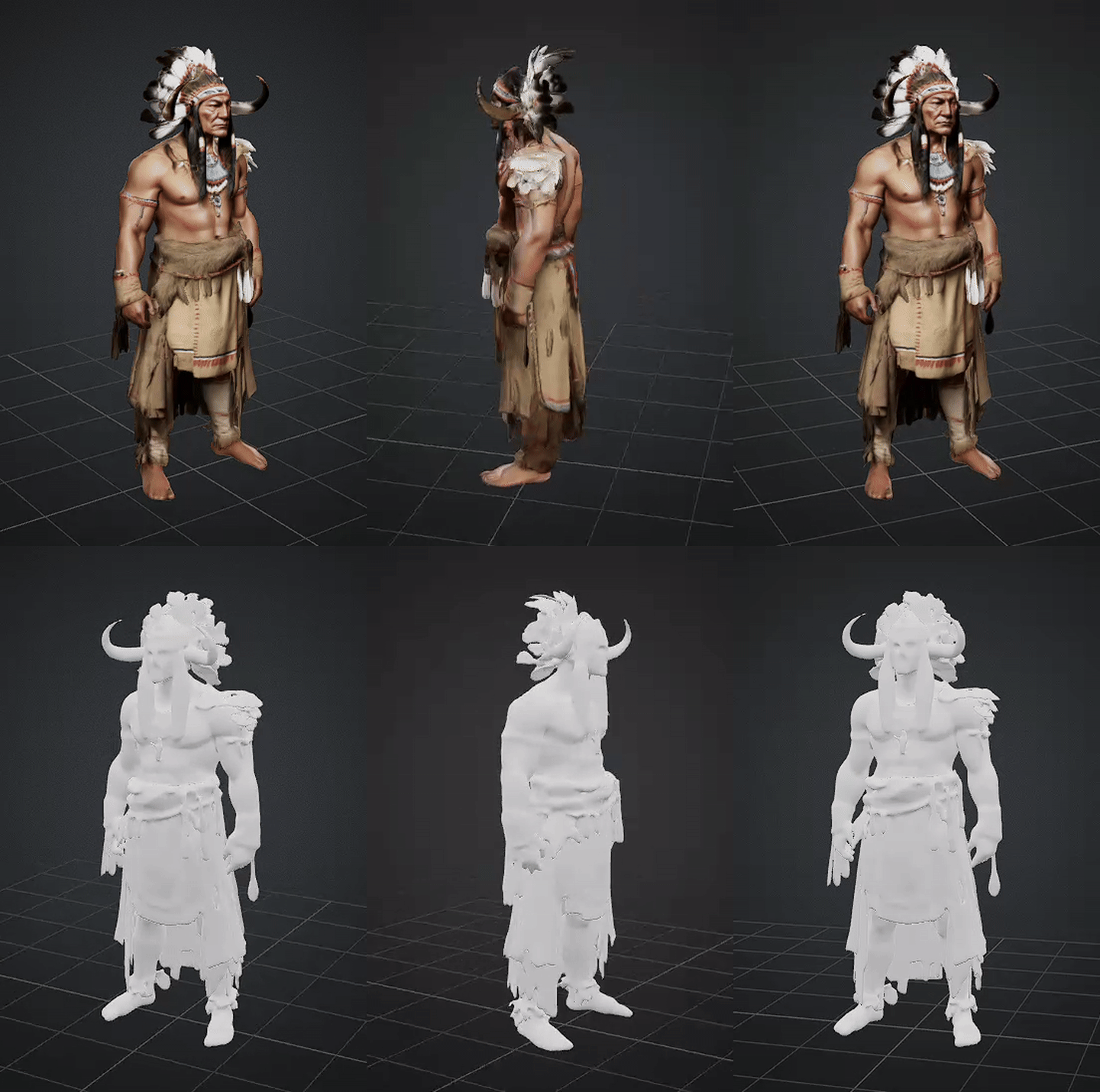
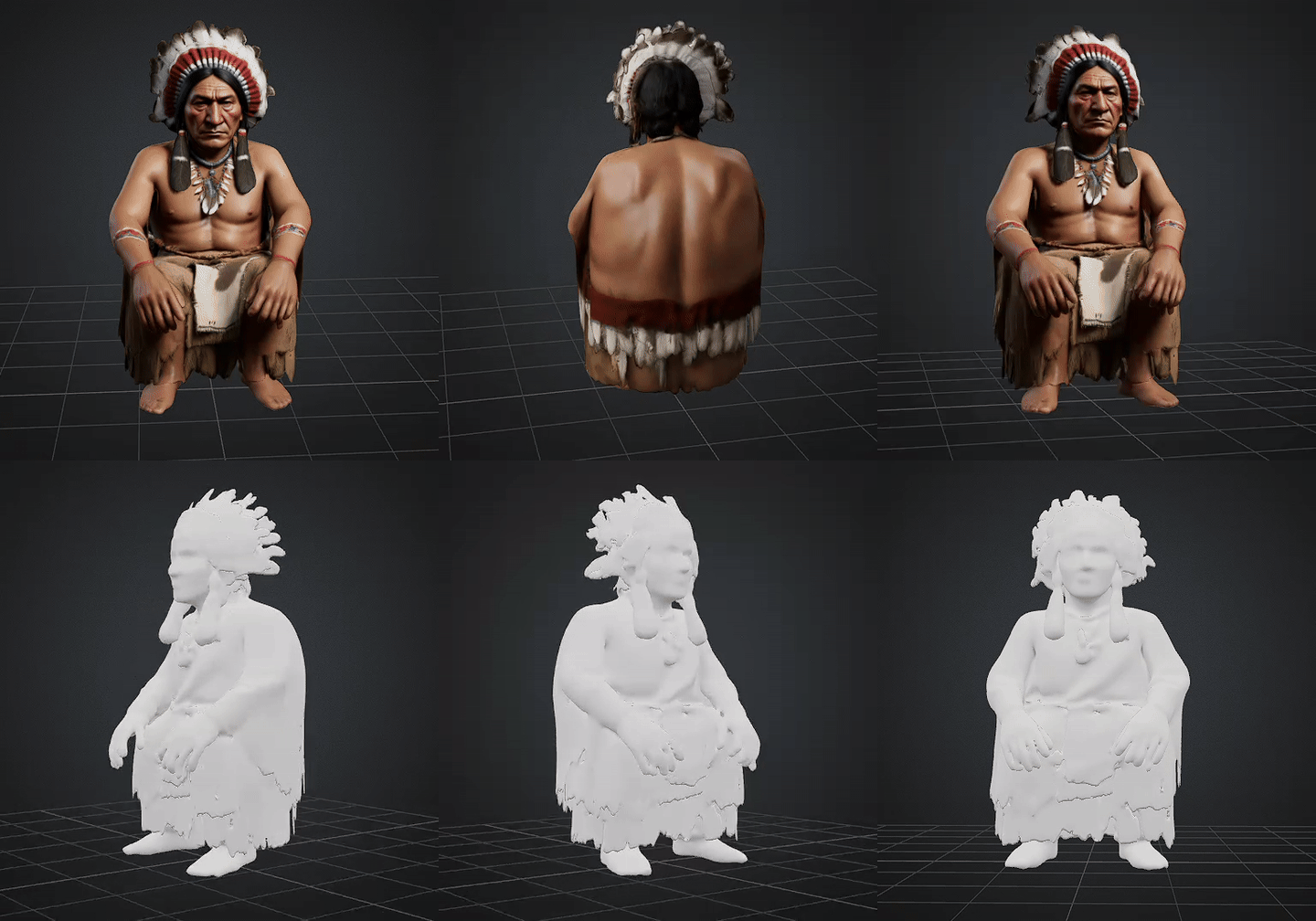
DBX Pack 3 Sitting Bull Stl Obj Glb for 3D Printer
Pack with 3 Models
English:
Sitting Bull, born in 1831 in present-day South Dakota, was a prominent Hunkpapa Lakota leader and medicine man, best known for his role in the resistance against U.S. government policies and his leadership during the Great Sioux War. He is famously known for his victory at the Battle of the Little Bighorn in 1876, where his forces, in alliance with other tribes, defeated General George Armstrong Custer and his troops. Sitting Bull’s vision and guidance during this conflict were crucial in uniting various Native American tribes against the encroachment of settlers and the U.S. military.
After the defeat of Custer, Sitting Bull became a symbol of Native American resistance, but the subsequent years were challenging. Following his eventual surrender in 1881, he was placed on a reservation in South Dakota. He later toured with Buffalo Bill’s Wild West Show, where he gained fame in the United States and Europe. However, his life was marked by tragedy and loss, particularly with the hardships faced by his people. Sitting Bull was killed in 1890 during an attempted arrest by Indian police, and he remains a significant figure in American history and Native American culture.
Français:
Sitting Bull, né en 1831 dans ce qui est aujourd'hui le Dakota du Sud, était un chef et homme de médecine Hunkpapa Lakota éminent, surtout connu pour son rôle dans la résistance contre les politiques du gouvernement américain et son leadership pendant la Grande Guerre Sioux. Il est célèbre pour sa victoire à la bataille de Little Bighorn en 1876, où ses forces, en alliance avec d'autres tribus, ont défait le général George Armstrong Custer et ses troupes. La vision et l'orientation de Sitting Bull pendant ce conflit ont été cruciales pour unir diverses tribus amérindiennes contre l'envahissement des colons et de l'armée américaine.
Après la défaite de Custer, Sitting Bull est devenu un symbole de la résistance amérindienne, mais les années suivantes ont été difficiles. Après sa reddition en 1881, il a été placé dans une réserve dans le Dakota du Sud. Il a ensuite tourné avec le Wild West Show de Buffalo Bill, où il a gagné en notoriété aux États-Unis et en Europe. Cependant, sa vie a été marquée par des tragédies et des pertes, notamment les difficultés rencontrées par son peuple. Sitting Bull a été tué en 1890 lors d'une tentative d'arrestation par la police indienne, et il demeure une figure significative de l'histoire américaine et de la culture amérindienne.
Español:
Sitting Bull, nacido en 1831 en lo que hoy es Dakota del Sur, fue un destacado líder Hunkpapa Lakota y un hombre de medicina, conocido principalmente por su papel en la resistencia contra las políticas del gobierno de EE. UU. y su liderazgo durante la Gran Guerra Sioux. Es famoso por su victoria en la Batalla de Little Bighorn en 1876, donde sus fuerzas, en alianza con otras tribus, derrotaron al general George Armstrong Custer y sus tropas. La visión y guía de Sitting Bull durante este conflicto fueron cruciales para unir a varias tribus nativas americanas contra la invasión de colonos y el ejército de EE. UU.
Después de la derrota de Custer, Sitting Bull se convirtió en un símbolo de la resistencia nativa americana, pero los años siguientes fueron desafiantes. Tras su eventual rendición en 1881, fue colocado en una reserva en Dakota del Sur. Más tarde, participó en el espectáculo del Viejo Oeste de Buffalo Bill, donde ganó fama en Estados Unidos y Europa. Sin embargo, su vida estuvo marcada por la tragedia y la pérdida, particularmente con las dificultades enfrentadas por su pueblo. Sitting Bull fue asesinado en 1890 durante un intento de arresto por parte de la policía indígena, y sigue siendo una figura significativa en la historia estadounidense y la cultura nativa americana.
Deutsch:
Sitting Bull, geboren 1831 im heutigen South Dakota, war ein prominenter Hunkpapa-Lakota-Anführer und Medizinmann, der vor allem für seine Rolle im Widerstand gegen die US-Regierungsrichtlinien und seine Führung während des Großen Sioux-Kriegs bekannt ist. Er ist berühmt für seinen Sieg in der Schlacht am Little Bighorn im Jahr 1876, in der seine Truppen in einer Allianz mit anderen Stämmen General George Armstrong Custer und seine Truppen besiegten. Die Vision und Führung von Sitting Bull während dieses Konflikts waren entscheidend, um verschiedene amerikanische Indianerstämme gegen die Eindringlinge und das US-Militär zu vereinen.
Nach der Niederlage von Custer wurde Sitting Bull zu einem Symbol des Widerstands der amerikanischen Ureinwohner, aber die folgenden Jahre waren herausfordernd. Nach seiner letztendlichen Kapitulation im Jahr 1881 wurde er in eine Reservation im South Dakota verlegt. Später tourte er mit Buffalo Bills Wild West Show, wo er in den USA und Europa berühmt wurde. Sein Leben war jedoch von Tragödien und Verlusten geprägt, insbesondere von den Schwierigkeiten, mit denen sein Volk konfrontiert war. Sitting Bull wurde 1890 während eines versuchten Verhaftungsversuchs durch Indianerpolizisten getötet und bleibt eine bedeutende Figur in der amerikanischen Geschichte und der Kultur der amerikanischen Ureinwohner.
Português:
Sitting Bull, nascido em 1831 no que é hoje o Dakota do Sul, foi um proeminente líder Hunkpapa Lakota e homem de medicina, mais conhecido por seu papel na resistência às políticas do governo dos EUA e sua liderança durante a Grande Guerra Sioux. Ele é famoso por sua vitória na Batalha de Little Bighorn em 1876, onde suas forças, em aliança com outras tribos, derrotaram o general George Armstrong Custer e suas tropas. A visão e orientação de Sitting Bull durante esse conflito foram cruciais para unir várias tribos nativas americanas contra a invasão de colonos e o exército dos EUA.
Após a derrota de Custer, Sitting Bull tornou-se um símbolo da resistência nativa americana, mas os anos subsequentes foram desafiadores. Após sua rendição em 1881, ele foi colocado em uma reserva no Dakota do Sul. Mais tarde, ele participou do show do Velho Oeste de Buffalo Bill, onde ganhou fama nos Estados Unidos e na Europa. No entanto, sua vida foi marcada por tragédias e perdas, especialmente com as dificuldades enfrentadas por seu povo. Sitting Bull foi morto em 1890 durante uma tentativa de prisão pela polícia indígena, e ele permanece uma figura significativa na história americana e na cultura nativa americana.
日本語 (Japanese):
シッティング・ブル(Sitting Bull)は、1831年に現在のサウスダコタ州で生まれたハンクパパ・ラコタ族の指導者であり、医療師として知られています。彼は、アメリカ合衆国政府の政策に対する抵抗の象徴的な人物であり、グレート・スー戦争の間に指導的な役割を果たしました。1876年のリトルビッグホーンの戦いでの勝利が有名で、彼の部隊は他の部族と同盟を結び、ジョージ・アームストロング・カスター将軍と彼の部隊を打ち負かしました。この戦争中のシッティング・ブルのビジョンと指導は、入植者やアメリカ軍の侵略に対抗して様々なネイティブアメリカン部族を団結させるのに重要でした。
カスターの敗北後、シッティング・ブルはネイティブアメリカンの抵抗の象徴となりましたが、その後の年は困難なものでした。彼は1881年に降伏した後、サウスダコタ州の予約地に置かれました。その後、バッファロー・ビルのワイルド・ウェスト・ショーに参加し、アメリカやヨーロッパで名声を得ました。しかし、彼の人生は悲劇と喪失に彩られ、特に彼の民族が直面した困難によって傷つけられました。シッティング・ブルは1890年にインディアン警察による逮捕の試み中に殺害され、彼はアメリカの歴史やネイティブアメリカン文化において重要な人物として残っています。
中文 (Chinese):
酋长坐牛(Sitting Bull)于1831年出生在如今的南达科他州,是一位杰出的哈库帕帕拉科塔族领袖和医学家,以其在抵抗美国政府政策中的重要角色和在大 Sioux 战争中的领导能力而闻名。他以1876年在小大角战役中的胜利而著称,在这场战斗中,他的部队与其他部落结盟,击败了乔治·阿姆斯特朗·卡斯特将军及其部队。在这场冲突中,坐牛的远见和指导对团结各个美洲原住民部落抵御定居者和美国军队的侵袭至关重要。
在卡斯特的失败后,坐牛成为美洲原住民抵抗的象征,但随后的岁月却充满挑战。1881年他最终投降后,被安置在南达科他州的一处保留地。他后来参加了巴法罗·比尔的西部秀,在美国和欧洲赢得了声誉。然而,他的生活充满悲剧和失落,特别是他的民族所面临的困境。坐牛在1890年被印第安警察试图逮捕时杀害,他在美国历史和美洲原住民文化中仍然是一个重要人物。





:format(webp)/https://fbi.cults3d.com/uploaders/33481740/illustration-file/4cb098bd-a895-488b-9eca-fb96d5aff8b6/donkey-video-1723071043266.gif)
:format(webp)/https://fbi.cults3d.com/uploaders/33481740/illustration-file/3d6cb3ad-25c5-4bd6-ae38-542af7f73d52/dbxeaglevd-ezgif.com-video-to-gif-converter-1.gif)
:format(webp)/https://fbi.cults3d.com/uploaders/33481740/illustration-file/d4e794eb-2d8a-4389-93be-c2ef7981ef5b/dbxpoodle_19.34.54-ezgif.com-video-to-gif-converter.gif)
:format(webp)/https://fbi.cults3d.com/uploaders/33481740/illustration-file/758d6548-4db7-48b9-8601-9f4756754a29/dbxtrexskull1_1.54.29-ezgif.com-video-to-gif-converter.gif)
:still()/https://fbi.cults3d.com/uploaders/33481740/illustration-file/d8e00301-d5f7-4f3a-a9e5-6750b277d4d3/dbx-lion-montain.gif)
:format(webp)/https://fbi.cults3d.com/uploaders/33481740/illustration-file/e2f4691c-2380-4d71-b0e3-a3e0243412f0/dbx-polar-bear-2.gif)
:still()/https://fbi.cults3d.com/uploaders/33481740/illustration-file/caa837ca-3388-47f8-a095-1b2cc71069d6/dbx-beethoven-bust.gif)
:format(webp)/https://fbi.cults3d.com/uploaders/33481740/illustration-file/19f46dc5-db9d-4ab7-952d-cd541dae5d72/dbx-horse-running-2.gif)