Recommended Printing Method and Settings
Our models are designed for optimal results on both FDM (Fused Deposition Modeling) and resin (SLA/DLP) printers. However, due to the intricate details of miniatures, we highly recommend resin printing for the best possible quality and finish.
● Resin Printing (SLA/DLP): Resin printing is the preferred method for these miniatures as it produces superior quality and finer details with a smoother surface finish. Resin prints are also generally stronger for thin and fine details, making them more resilient during handling and gameplay.
● FDM Printing: FDM printing is a great option for these models, but it requires careful configuration to achieve high-quality results. If you are using an FDM printer, please follow these recommendations:
• Supports: Supports are highly recommended for all miniatures to ensure successful printing of overhangs and delicate features. We suggest using tree supports or organic supports if your slicer software (like Cura, PrusaSlicer, or Orca Slicer) supports them. These are generally easier to remove and leave fewer marks on the final print.
• Layer Height: For the best detail, use a fine layer height between 0.08mm and 0.12mm. While a 0.08mm layer height will yield the best visual results, a 0.12mm height provides an excellent balance of detail and print speed.
• Scale: For those who experience issues with fine details breaking or not printing correctly on FDM printers, consider scaling the model up slightly. For example, scaling a standard 1-inch base model up to 157.5% will result in a base of approximately 40mm, which can make thin parts more robust and easier to print.
Model Dimensions and Scaling
X-, Y-, and Z-direction model dimensions are provided in the 3D model description section. However, the following general guidelines apply:
● Standard Miniatures: The miniatures are designed to be a standard size for tabletop role-playing games, with a character standing on a base of approximately 1 inch in diameter.
● Larger Models: Larger models, such as monsters or creatures like dragons, are designed for a base of approximately 2 inches in diameter.
● Other Items: Terrain items, such as floors, walls, tables, books, etc. are modeled proportionately to the character and creature dimensions outlined above.
Information specific to this model:
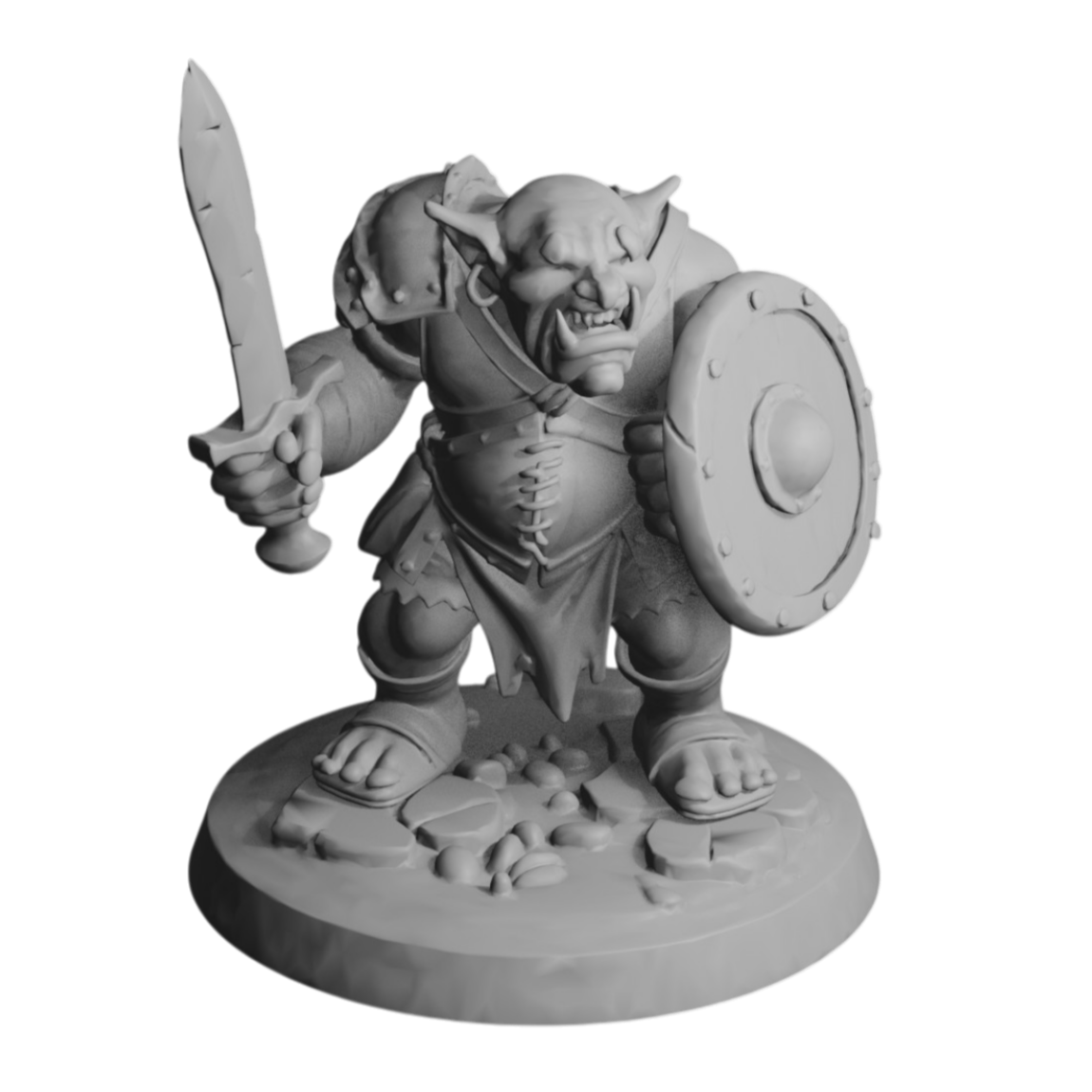
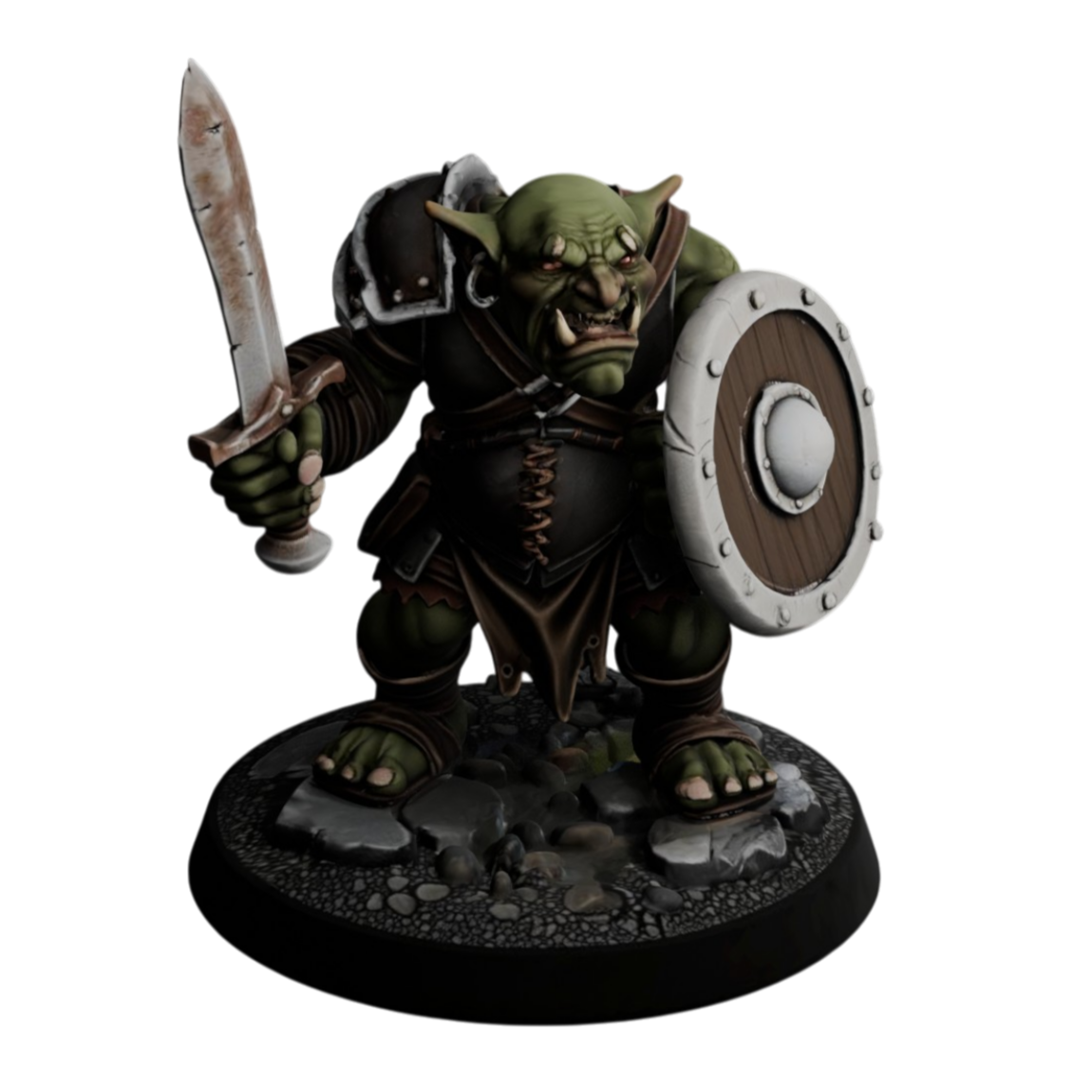
● Unique Features: This goblin warrior is a standard-sized character model with several key components that require careful printing. The most prominent are the raised sword and shield, the goblin's arms, and its expressive, snarling face. Other intricate details include the worn leather armor, tattered loincloth, and the detailed, textured base that adds to its character.
● FDM Printing Tips: Due to the small scale and complex overhangs on the arms and weapons, supports are highly recommended. We suggest using tree or organic supports to ensure they can be easily removed from the finely detailed surfaces of the goblin’s face, hands, and weapons. For the best detail on the facial features and armor textures, consider lowering your print speed slightly (e.g., 30-40mm/s) to give the printer head more time to accurately lay down each layer.
● Slicer Settings: Bed adhesion is crucial for smaller models to prevent them from detaching. Using a brim can help ensure the model stays securely in place throughout the print. For support removal, a support-to-model clearance of around 0.2mm is a good starting point. An infill of 10-15% is recommended, as it provides more than enough sturdiness for a miniature without adding unnecessary print time or material usage.
:format(webp)/https://fbi.cults3d.com/uploaders/35013579/illustration-file/25f63884-a770-49f4-989b-8a344e0147ca/Fierce-Goblin-Warrior-Colorless-Transparent.png)
/https://preview3d-images.cults3d.com/ujlmuzpv2jm2xag0da7458trn6zk)
/https://preview3d-images.cults3d.com/mzls7tknf1u3xz3nrfepnqbycdm8)
/https://fbi.cults3d.com/uploads/user/avatar/35013579/Profile_Image.png "SlyceStudios")


:format(webp)/https://fbi.cults3d.com/uploaders/35013579/illustration-file/db661a5c-654f-410d-98ed-f04bb07b12fe/Dragon-Colorless-Transparent.png)
:format(webp)/https://fbi.cults3d.com/uploaders/35013579/illustration-file/3cdf74b7-6b26-4adf-a389-06b8e914a156/Grolak-the-Sunderbeast-Colorless-Front-Transparent.png)
:format(webp)/https://fbi.cults3d.com/uploaders/35013579/illustration-file/0ace2e32-5d11-4c56-9ce5-e191f78bb61d/Malakor-Colorless-Front-Transparent.png)