What it is & why it matters
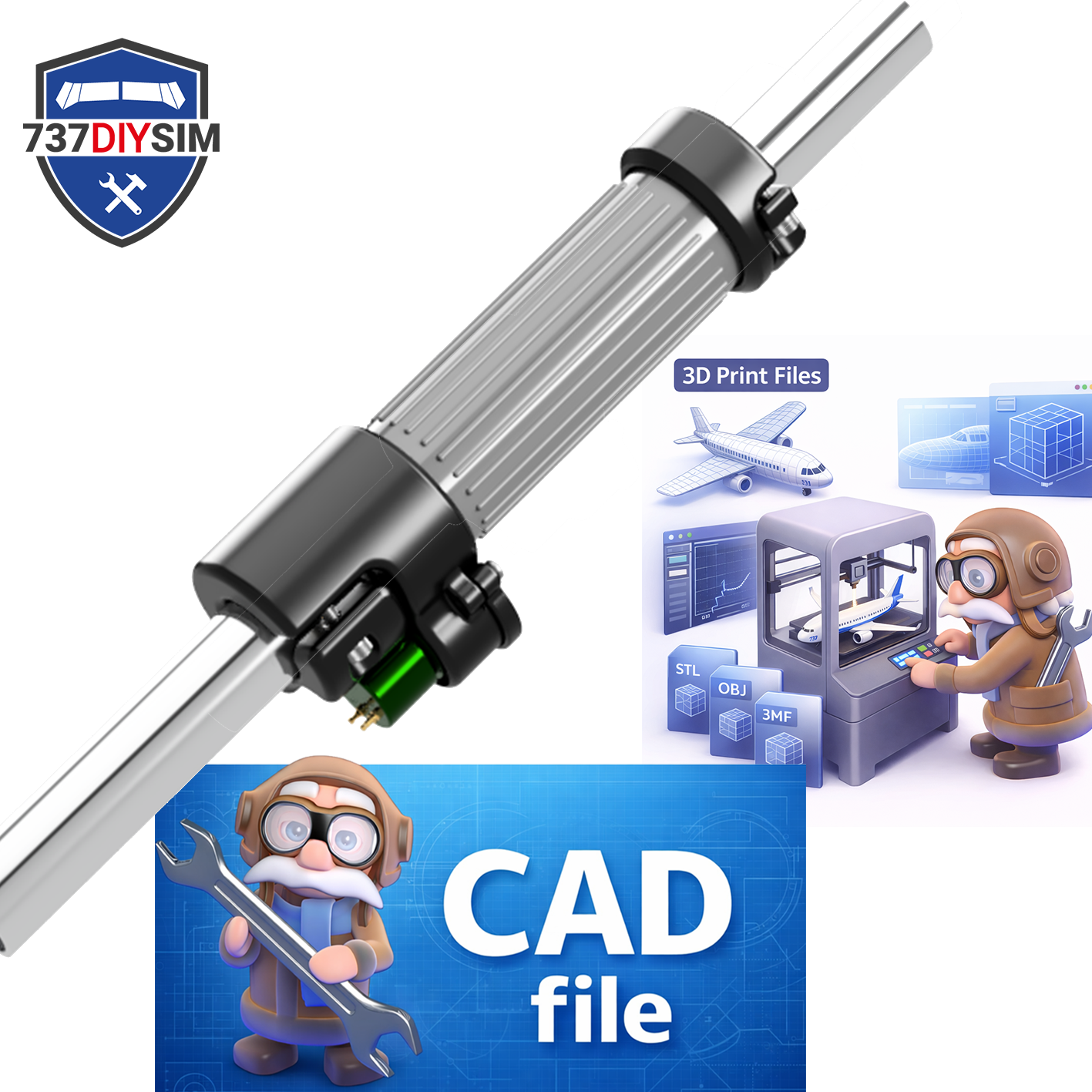
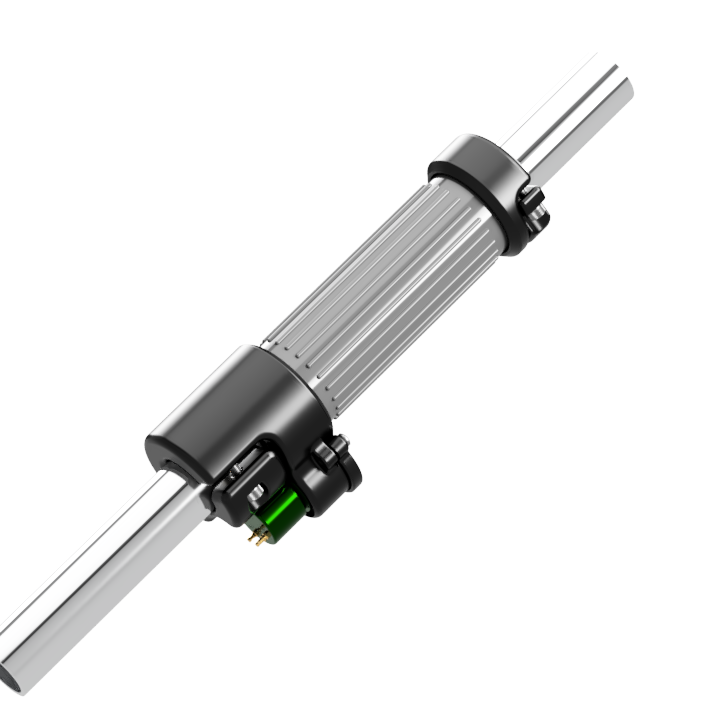
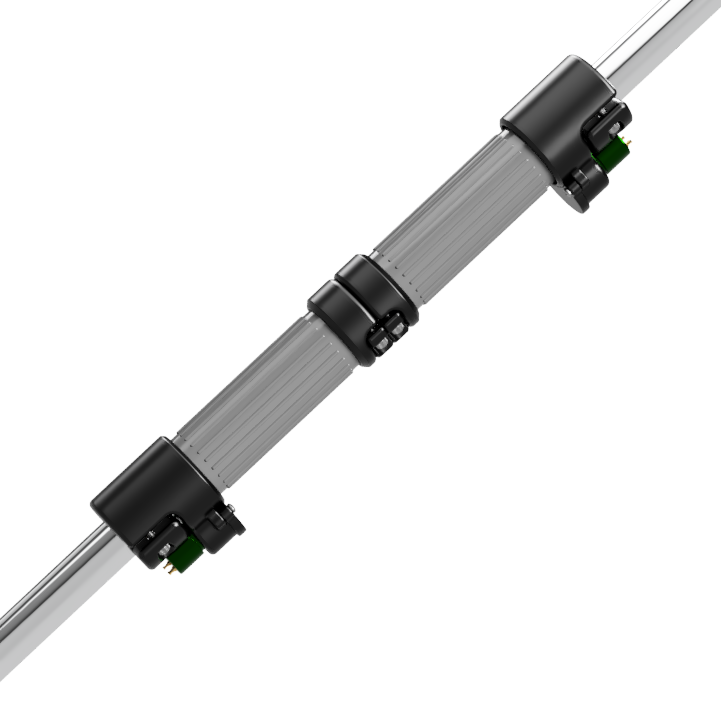
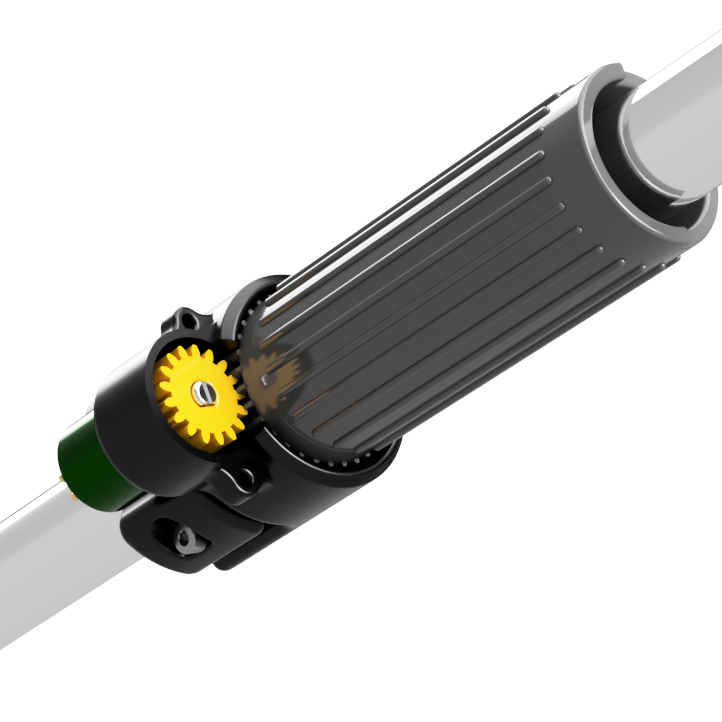
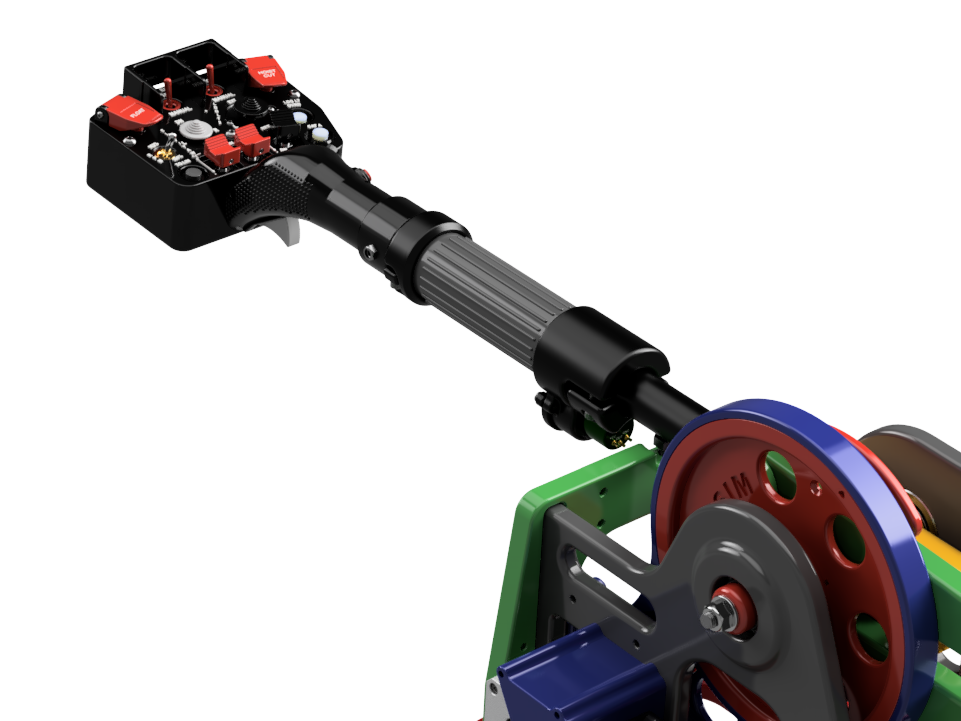
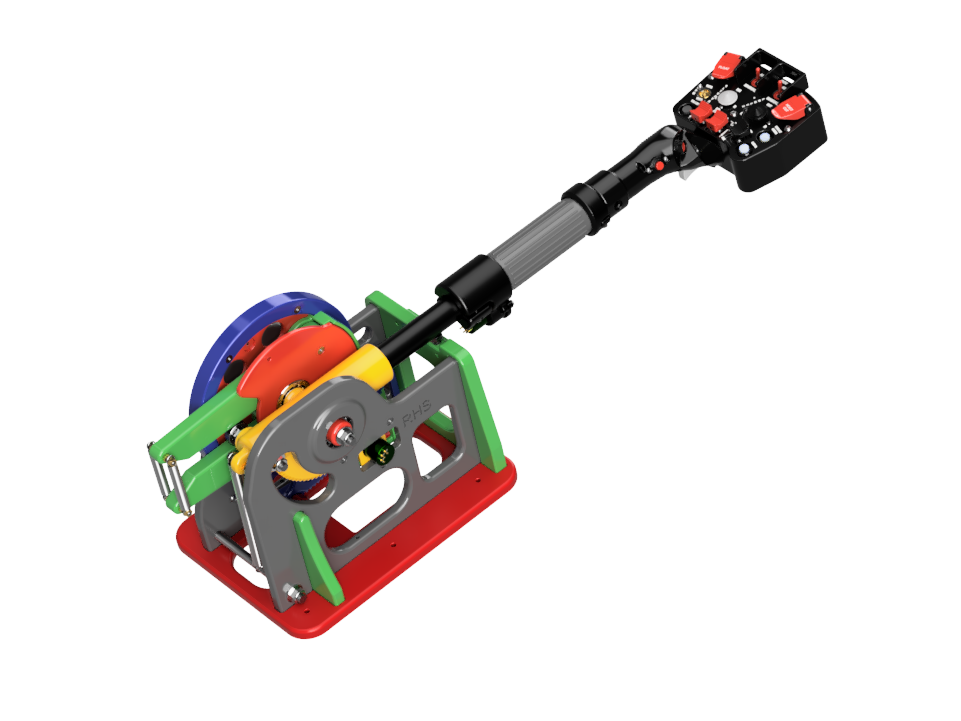
This is a high‑fidelity twist throttle grip for helicopter simulation, inspired by the Bell 212. It delivers full 180‑degree rotation and uses a precision hall sensor for accurate, drift‑free position data. Designed around a 25 mm shaft, the clamp provides a secure, play‑free fit for dependable control. Use one unit for single‑engine aircraft—or two for twin‑engine realism.
Originality & design goals
Authentic feel: The form factor and rotation envelope are modeled after the Bell 212’s twist throttle concept to capture the muscle memory and ergonomics sim pilots expect.
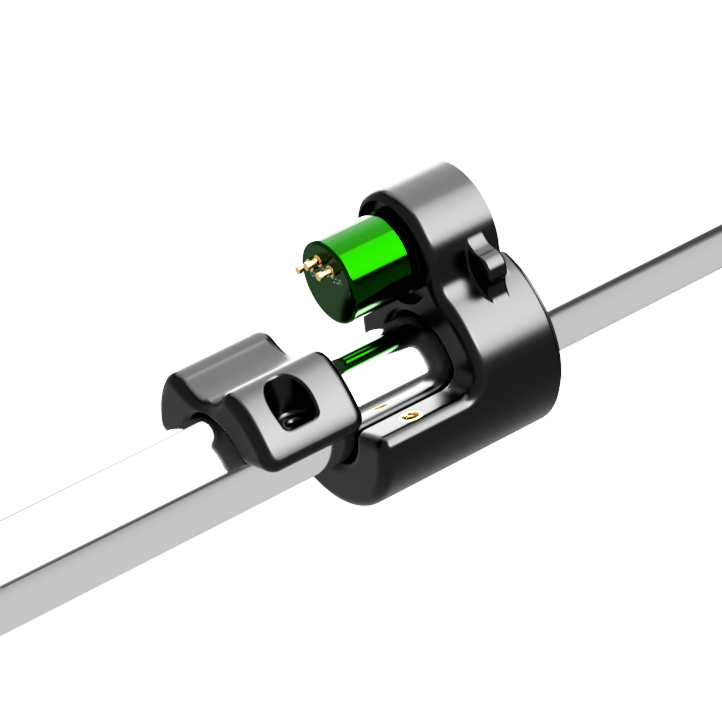
Smooth, precise input: A hall sensor translates motion to clean, high‑resolution signals for modern flight‑control electronics.
Robust & adaptable: Print‑friendly geometry, replaceable wear parts, and a practical clamp make it easy to install, service, and tune to your rig.
Essential for sim pilots
Fine throttle management is crucial for hover work, autos, and engine synchronization. This grip’s progressive, low‑friction action and sensor accuracy help you hold torque precisely, manage RPM smoothly, and hone real procedures with confidence.
🔧 Key Features
Design Inspiration: Bell 212‑style twist throttle.
Rotation Range: True 180° for smooth, predictable travel.
Sensing: Hall sensor‑ready architecture for precise, contactless position data.
Fitment: 25 mm shaft clamp for a solid, repeatable mount.
Single or Twin: Use two grips for twin‑engine helicopters—one per engine.
(Features corroborated by the current working pack Heli Collective Throttle CAD v3 and companion STL.) [737diysim-...epoint.com], [737diysim-...epoint.com]
📁 What’s Included (Download)
STL set for all printed parts (e.g., HS Base, HS Cap, Spur Gear (17T), Base Cap, Twist Grip, Twist Base, Twist Clamp, and Body Mod variants).
Read‑me / overview PDF with part names and structure.
Current version: v3 of the CAD/STL pack.
(File naming and version based on Heli Collective Throttle CAD v3 and STL.) [737diysim-...epoint.com], [737diysim-...epoint.com]
Build guide & components list:
Follow the step‑by‑step assembly and BOM here: https://www.737diysim.com/copy-of-build-guides-1
🧪 Recommended Print Settings (Guidance)
Material: PETG or ABS/ASA (heat and creep resistance for mechanical parts).
Layer height: 0.20 mm standard; 0.16 mm for grip surfaces if you want finer texture.
Perimeters/Walls: 4+ for clamps and load‑bearing parts.
Infill: 35–50 % gyroid or grid for strength vs. weight.
Orientation:
Clamp and base parts: orient to keep layer lines perpendicular to clamping force.
Grip: orient for best surface quality in the hand contact area.
Supports: As required; avoid internal support where the sensor sits.
Post‑processing: Light ream/sand bearing and shaft interfaces for a snug, smooth fit.
(Tune to your printer and filament; always verify clearances before final assembly.)
🔌 Electronics & Integration (Overview)
Sensor: Hall sensor‑based measurement (wiring per your controller board).
Controller compatibility: Pairs well with common USB joystick controller boards that accept analog inputs.
Calibration: Map 0–180° travel to your sim in your chosen interface (e.g., Windows Game Controllers, your board’s config tool, or your sim’s control settings).
Exact component specs, wiring, and mounting details are in the build guide and BOM:
https://www.737diysim.com/copy-of-build-guides-1
🧩 Compatibility
Mechanical: 25 mm shaft.
Use cases: Single‑engine with one grip; twin‑engine with two grips mounted in parallel.
Rigs: Designed for DIY helicopter collectives and similar sim hardware.
⚠️ Limitations & Notes
Simulation use only: Not for real aircraft.
Machining tolerances: Depending on your printer, minor sanding/reaming may be required for a perfect fit.
IP notice: “Bell” and “Bell 212” are trademarks of their respective owners and are referenced here for descriptive purposes only.
:format(webp)/https://fbi.cults3d.com/uploaders/47515376/illustration-file/1f2807de-833a-4ce8-9c15-4ed24ee77d01/CULTS-TWST-THR.png)
/https://preview3d-images.cults3d.com/dse0pfd4y7zm8naacu16tpstut0n)
/https://preview3d-images.cults3d.com/xwdzb95s4p9eje7wo0y54hldc3px)
/https://preview3d-images.cults3d.com/gb29fqrav4vqsqa30vcwf5l2vl21)
/https://preview3d-images.cults3d.com/tmg61h5tacyixiwetjf9dvacrfwc)
/https://preview3d-images.cults3d.com/ch9h5imne0fb2ed25zxlj317bmim)
/https://preview3d-images.cults3d.com/pghw4ndjtixw0xatuo4dyg5xq1sh)
/https://preview3d-images.cults3d.com/8uew964li9soyhkxrfa8sie9prwf)
/https://preview3d-images.cults3d.com/3wxsfqsfvs8vpish820tvwyjfn9v)
/https://preview3d-images.cults3d.com/nmvw0tir06hyzmarxjn9lld4cbn8)
/https://preview3d-images.cults3d.com/s2ypx8rwh3admak0xa08bn2o9917)
/https://preview3d-images.cults3d.com/gston65a0telzt99jptnibgddxh7)
/https://preview3d-images.cults3d.com/2vtpia413iv8nlyhm0svlgkubs65)
/https://preview3d-images.cults3d.com/le2xxtl7f4qjtfujii3vbbq8aw25)
/https://preview3d-images.cults3d.com/7oeinhplj9meqmw02ugsxm3temkd)
/https://preview3d-images.cults3d.com/ibae7kzbtgcdovl3fjqwr3r1noea)
/https://preview3d-images.cults3d.com/mv926w11agjif6byzf13cvy1dp45)
/https://fbi.cults3d.com/uploads/user/avatar/47515376/737DIYSIM_Logo_1.png "737DIYSIM")


:format(webp)/https://fbi.cults3d.com/uploaders/47515376/illustration-file/a1283c68-2180-4353-b841-618c2832df42/CULTS-SPM-MTU.png)
:format(webp)/https://fbi.cults3d.com/uploaders/47515376/illustration-file/b2167597-74fe-4949-bbda-41a27c4ca0ab/CULTS-MTU-STL.png)
:format(webp)/https://fbi.cults3d.com/uploaders/47515376/illustration-file/d4d854f6-0e28-44e4-9a15-659124976804/CULTS-CYC-STL.png)
:format(webp)/https://fbi.cults3d.com/uploaders/47515376/illustration-file/e24ee333-a0e7-497d-8b9e-02f0a69ddfb0/CULTS-G1000.png)
:format(webp)/https://fbi.cults3d.com/uploaders/47515376/illustration-file/c9a6384e-7832-4ba8-a560-18196ad88409/CULTS-SCC.png)
:format(webp)/https://fbi.cults3d.com/uploaders/47515376/illustration-file/ca0add75-3b56-4064-b5a1-c8bc6fed37f7/737-Build-Guide-sample-Photos-10.jpg)
:format(webp)/https://fbi.cults3d.com/uploaders/47515376/illustration-file/8450273d-8036-4113-97e8-81e08c795874/CULTS-SCC.png)
:format(webp)/https://fbi.cults3d.com/uploaders/47515376/illustration-file/0151e8ba-8422-4ea4-a199-1c078947b212/CULTS-SCC.png)